San Jose traffic signal timing records often become an important source of information after a serious intersection collision. Intersections are among the most complex areas of any roadway because multiple streams of traffic, pedestrians, bicyclists, buses, and turning vehicles all interact within a relatively small space. When a crash occurs, drivers frequently disagree about which traffic signal was green, whether a protected turn arrow was active, or how long a yellow light had been displayed before impact. Because memories can differ significantly after a stressful event, investigators sometimes review traffic signal timing information alongside other available evidence to better understand the sequence of events.
Modern traffic signals operate using programmed timing plans that control when green, yellow, and red lights appear for each direction of travel. Many intersections throughout San Jose also include dedicated left-turn phases, pedestrian crossing intervals, bicycle signal phases, and adaptive traffic systems that respond to changing traffic conditions. These systems generate information that may help investigators understand how the intersection was operating at the time of the collision. This is one reason San Jose traffic signal timing records are sometimes reviewed together with police reports, surveillance footage, witness statements, and crash-scene documentation.
Understanding San Jose traffic signal timing records can help accident victims appreciate why preserving evidence early often becomes so important. Traffic camera footage, photographs, witness contact information, and digital records may all complement traffic signal information while helping investigators reconstruct what happened before the collision. The more complete the available documentation becomes, the easier it often is to evaluate how the intersection was functioning when the accident occurred.
Why Traffic Signal Timing Can Become Important After an Intersection Crash
Green lights, yellow lights, and protected turn phases
Most drivers think of traffic signals as simple green, yellow, and red lights. In reality, many busy intersections operate using carefully programmed timing sequences that control multiple directions of travel simultaneously. Protected left-turn arrows, flashing yellow arrows, pedestrian walk signals, and dedicated bicycle phases may all operate independently while coordinating traffic movement through the intersection.
For a San Jose traffic signal timing records investigation, understanding these programmed phases often helps place the collision into its proper context. Investigators may review how long each traffic movement received a green signal, when yellow intervals began, and whether protected turning movements were active before impact occurred. These details frequently help explain why different drivers remember the collision differently, particularly when several traffic movements were occurring at the same time.
Traffic signal timing information is generally reviewed together with other available evidence rather than by itself. Police reports, witness statements, surveillance recordings, photographs, and San Jose traffic signal timing records frequently complement one another by helping investigators better understand how traffic was flowing immediately before the collision.
Why drivers sometimes disagree about who entered first
One of the most common disputes after an intersection collision involves determining which driver lawfully entered the intersection first. Following a crash, both drivers may honestly believe they had a green light or the right to proceed. Stress, limited visibility, and the rapid sequence of events often make it difficult for anyone involved to remember every detail with complete accuracy.
For a San Jose traffic signal timing records review, investigators frequently compare driver statements with objective evidence collected after the collision. Traffic signal timing plans may help establish how the intersection was programmed to operate during that period of the day. Surveillance footage, dashcam recordings, witness observations, and crash-scene photographs often provide additional perspectives regarding vehicle movement before impact.
Because no single source of evidence tells the complete story, investigators generally evaluate the available documentation together. San Jose traffic signal timing records often become one part of a broader reconstruction that also includes physical evidence, roadway design, and digital documentation collected throughout the investigation.
Adaptive traffic signals and changing traffic patterns
Many modern intersections no longer operate on identical timing cycles throughout the day. Instead, adaptive traffic control systems monitor traffic flow and adjust signal timing based on current roadway conditions. During rush hour, major sporting events, construction activity, or emergency situations, traffic signal timing may change to improve traffic movement and reduce congestion.
For a San Jose traffic signal timing records investigation, adaptive signal operation may provide important context regarding how the intersection functioned when the collision occurred. Timing plans used during morning commuter traffic may differ from those used during the afternoon or late evening. Understanding these adjustments sometimes helps investigators evaluate the broader circumstances surrounding the crash.
Traffic engineers design adaptive systems to improve efficiency while maintaining safe traffic operations. Reviewing San Jose traffic signal timing records alongside traffic engineering information, police reports, and surveillance footage frequently provides a more complete understanding of the roadway environment than relying on driver recollections alone.
Other Evidence That Often Complements Signal Timing Records
Traffic cameras, business surveillance, and dashcam recordings
Traffic signal timing information often becomes much more valuable when reviewed alongside video evidence. Many intersections throughout San Jose are located near office buildings, retail centers, apartment complexes, gas stations, and commercial properties equipped with surveillance cameras. In addition, private vehicles increasingly use dashcams that may record the moments leading up to a collision.
For a San Jose traffic signal timing records investigation, surveillance footage frequently helps establish vehicle movement, lane position, traffic flow, and driver actions before impact. Even when cameras do not directly capture the collision, they may record vehicles approaching the intersection or traveling through nearby roadways immediately beforehand. Dashcam footage often provides another perspective by documenting traffic signal displays, weather conditions, and surrounding traffic during the approach.
When reviewed together, surveillance recordings, dashcam footage, police reports, witness statements, and San Jose traffic signal timing records frequently provide investigators with a much more complete understanding of the accident. Rather than relying on one source of information, combining multiple forms of evidence often creates the clearest reconstruction of the collision.
Other Evidence That Often Complements Signal Timing Records
Police reports, intersection diagrams, and crash-scene photographs
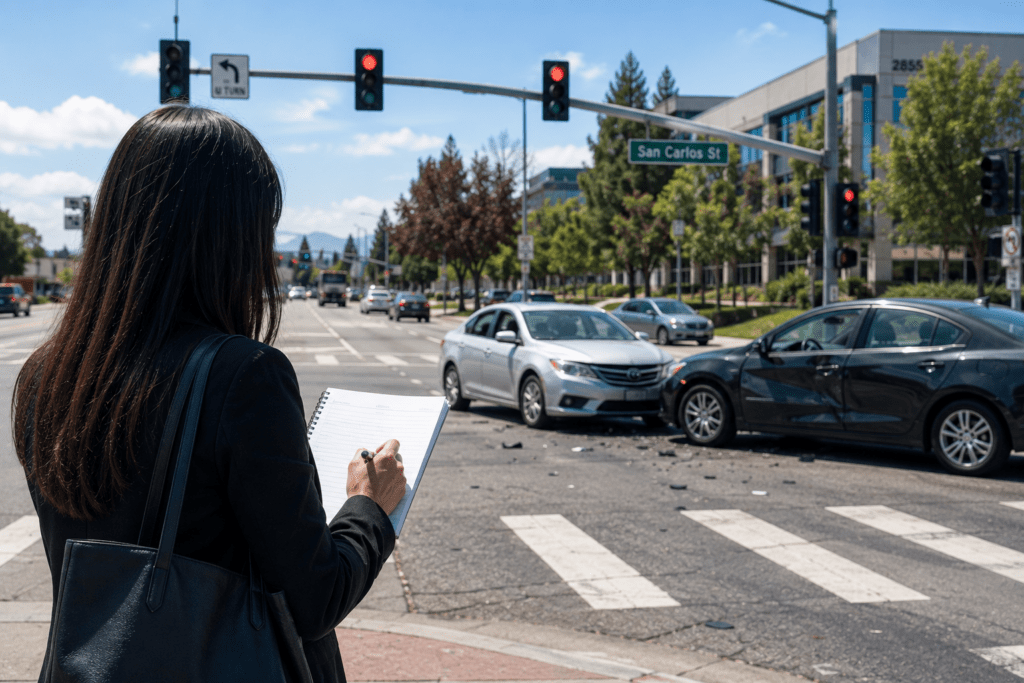
Traffic signal timing information often becomes most useful when combined with traditional accident documentation. Police reports, officer-prepared intersection diagrams, measurements taken at the scene, and photographs frequently provide valuable context regarding vehicle positions, lane assignments, impact locations, and roadway conditions. While San Jose traffic signal timing records may explain how the traffic signal system was operating, physical evidence often illustrates how the vehicles interacted within that environment.
For a San Jose traffic signal timing records investigation, crash-scene photographs frequently preserve important details before conditions change. Images showing traffic signals, lane markings, stop bars, crosswalks, skid marks, debris, damaged vehicles, weather conditions, and surrounding intersections often help investigators compare physical evidence with traffic signal timing information. Officer diagrams may further illustrate the location of each vehicle before and after impact, providing another valuable reference during the investigation.
These records frequently work together rather than independently. A traffic signal timing plan may indicate when a green phase occurred, while photographs show the location of the vehicles at impact. Police reports document officer observations, and San Jose traffic signal timing records provide additional technical information regarding the signal operation. Together, they often create a much stronger factual record than any single source of evidence alone.
Witness observations and nearby surveillance footage
Witnesses often observe details that neither driver fully remembers after a collision. Someone waiting to cross the street, another motorist stopped at the intersection, a cyclist using a nearby bike lane, or a pedestrian walking through the crosswalk may have viewed the accident from a completely different perspective. Their observations sometimes provide valuable information regarding signal changes, vehicle movement, or traffic conditions immediately before the crash.
For a San Jose traffic signal timing records review, witness statements frequently complement surveillance footage from nearby businesses, public buildings, parking garages, or private security systems. Video recordings may capture the approach to the intersection, while witnesses describe traffic flow, pedestrian activity, or unusual driving behavior that occurred before impact. These different sources of information often reinforce one another when reviewed together.
Because surveillance systems frequently overwrite recordings after a limited period, identifying nearby cameras early often becomes important. Preserving available video alongside San Jose traffic signal timing records, witness contact information, and crash-scene documentation frequently helps create the strongest possible reconstruction of the accident.
Medical Documentation After an Intersection Collision
Emergency treatment, follow-up care, and specialist referrals
Medical documentation often becomes just as important as traffic evidence after an intersection collision. Emergency room evaluations, ambulance reports, physician examinations, diagnostic imaging, specialist consultations, and follow-up appointments frequently establish when injuries were identified and how treatment progressed throughout recovery. These records often explain the physical effects of the collision while technical evidence explains how the collision occurred.
For someone involved in a San Jose traffic signal timing records investigation, maintaining organized medical documentation often helps create a complete picture of the accident. Physicians may diagnose fractures, soft tissue injuries, traumatic brain injuries, spinal injuries, shoulder injuries, or other conditions requiring continued medical care. As treatment progresses, follow-up appointments frequently document changes in pain, mobility, strength, and daily function.
Medical records and San Jose traffic signal timing records serve different purposes, but together they often provide a much more comprehensive understanding of the claim. Traffic evidence helps explain the sequence of events leading to the collision, while medical documentation explains how the collision affected the injured individual.
Work restrictions, mobility limitations, and recovery records
Intersection collisions frequently affect much more than physical health. Many accident victims experience temporary or long-term limitations involving work responsibilities, driving, lifting, exercise, childcare, or household activities. Healthcare providers often document these restrictions while monitoring recovery and adjusting treatment recommendations throughout the rehabilitation process.
For a San Jose traffic signal timing records review, physician work restrictions, physical therapy records, rehabilitation notes, and employer documentation often provide valuable information regarding the practical effects of the injuries. These records help explain how recovery progressed beyond the initial emergency room visit and how the collision affected daily life over time.
Maintaining organized documentation throughout recovery frequently strengthens the overall accident file. Work records, medical appointments, rehabilitation notes, and San Jose traffic signal timing records often complement one another by documenting both the technical circumstances of the collision and its impact on the injured person’s everyday activities.
Organizing accident records from the beginning
One of the most effective ways to preserve evidence following an intersection collision is maintaining an organized accident file from the very beginning. As the investigation develops, individuals often accumulate police reports, medical records, repair estimates, insurance correspondence, witness information, photographs, and digital documentation. Without a system for organizing these materials, important information can easily become difficult to locate later.
For a San Jose traffic signal timing records investigation, keeping traffic-related documentation together with medical records, photographs, surveillance requests, and insurance communications often provides investigators with a clearer timeline of events. Organizing records chronologically frequently makes it easier to understand how the collision occurred, how treatment progressed, and how additional evidence became available over time.
Rather than viewing each document separately, investigators often review the complete file as one comprehensive record. San Jose traffic signal timing records, police reports, medical documentation, photographs, and witness statements frequently work together to create the strongest overall understanding of the accident and the recovery process.
Contact Super Woman Super Lawyer for a Free Consultation — No Fee Unless We Win, Available 24/7
Why traffic signal records often strengthen an intersection investigation
Intersection accidents frequently involve technical evidence that does not exist after many other types of collisions. Traffic signal timing information, surveillance footage, crash-scene photographs, police reports, witness statements, dashcam recordings, repair documentation, and medical records often work together to explain how the collision occurred and how it affected those involved.
For a San Jose traffic signal timing records review, preserving these records as early as possible frequently helps investigators reconstruct the sequence of events more accurately. While no single source of evidence tells the entire story, San Jose traffic signal timing records often provide valuable technical information that complements every other part of the investigation.
If you have questions regarding San Jose traffic signal timing records, speaking with a San Jose Car Accident Lawyer can help provide additional clarity regarding intersection investigations, traffic signal documentation, and the evidence that may become important after a collision.
The Federal Highway Administration (FHWA) provides educational information regarding traffic signal operations, roadway engineering, and intersection safety:
Connect With Super Woman Super Lawyer
A San Jose traffic signal timing records investigation often involves much more than reviewing vehicle damage. Traffic signal timing plans, surveillance footage, witness statements, police reports, crash-scene photographs, repair estimates, and medical documentation frequently work together to explain how the collision occurred and how it affected the people involved.
The sooner San Jose traffic signal timing records and other supporting documentation are identified and preserved, the easier it often becomes to understand the complete sequence of events. Whether the collision involved a protected left-turn phase, changing traffic signals, or conflicting driver accounts, thorough documentation frequently provides the clearest picture of what happened.
Online Form: Request a case review
Call Now: 800.800.6916
Live Chat: Speak with a legal professional instantly
 Maryam Parman