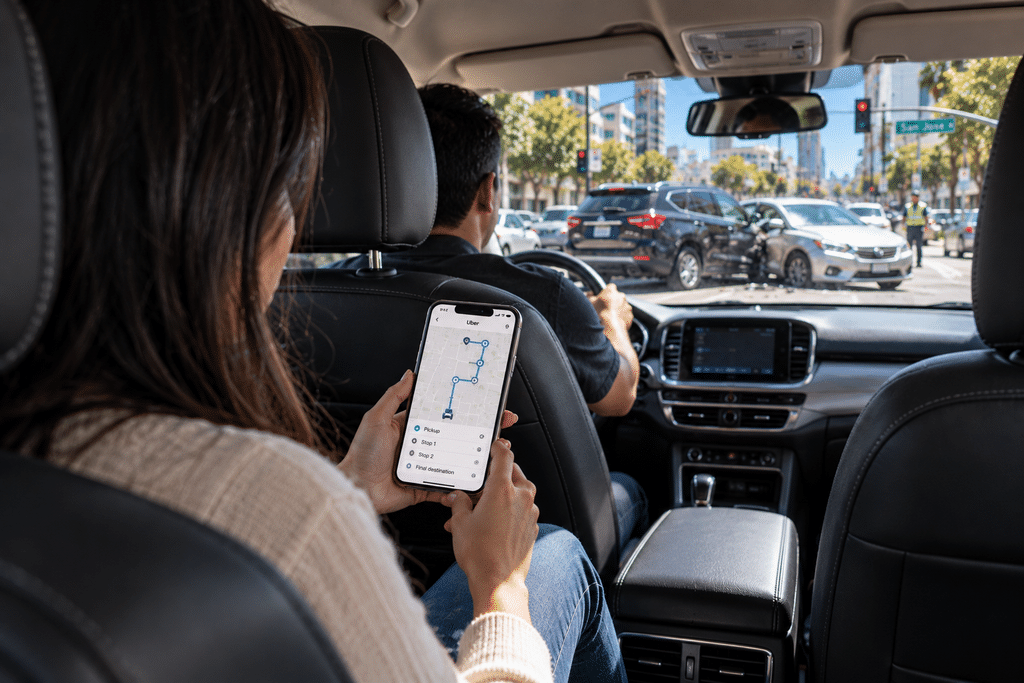
A San Jose rideshare passenger accident during a multi-stop trip can create evidence questions that do not arise during a simple ride from one pickup location to one destination. The passenger may have requested several stops when booking the trip, added another stop after entering the vehicle, changed the destination while traveling, or been between stops when the collision occurred. Those details can matter because the trip record may help establish that the passenger was still participating in an active Uber or Lyft ride at the time of the crash.
For a passenger, one of the most important early steps after a San Jose rideshare passenger accident may be preserving the information already available through the rideshare account. The trip receipt, route map, pickup location, added stops, final destination, driver profile, vehicle details, fare information, in-app messages, and support communications may collectively document the ride. Screenshots can be particularly useful because information displayed in an app can change as the trip moves from an active ride to a completed trip or support case.
California law also imposes specific insurance requirements on transportation network companies. California Public Utilities Code section 5433 addresses insurance requirements applicable to transportation network company activity, including coverage during different periods of a driver’s use of the platform. Determining which coverage applies to a particular San Jose rideshare passenger accident requires the actual facts, including the status of the trip when the collision occurred.
The California Public Utilities Commission regulates transportation network companies such as rideshare services in California and provides information about TNC regulation and passenger safety. Official requirements provide useful context, but the passenger’s own app records may become some of the clearest evidence showing the actual trip sequence.
If you were injured while riding as a passenger, our San Jose Uber and Lyft Accident Lawyer page provides additional information about how Super Woman Super Lawyer can evaluate trip records, accident evidence, insurance communications, and medical documentation after a rideshare collision.
Connect with Super Woman Super Lawyer today through our Online Form, call 800.800.6916, or start a Live Chat. After a San Jose rideshare passenger accident, preserving the complete multi-stop trip record early may help document where the ride began, which stops were included, where the crash happened within the trip, and what information was available through the rideshare platform.
Why Multi-Stop Trip Details May Matter After a Crash
A multi-stop rideshare trip creates a sequence rather than a single route. The passenger may travel from an original pickup to a first stop, remain in the vehicle while another passenger enters or exits, continue to another destination, and eventually reach the final drop-off. If a collision interrupts that sequence, the location of the crash within the trip can become an important factual question.
For a San Jose rideshare passenger accident, the complete trip history may help distinguish an active ride from activity that occurred before pickup or after the passenger’s trip had ended. That distinction may become relevant when insurers evaluate coverage and when the parties attempt to reconstruct what the driver was doing at the time of the collision.
Original Pickup, Added Stops, and Final Destination
The original trip request may establish the passenger’s starting point and intended destination. During a multi-stop trip, however, that information may not tell the whole story. One or more intermediate stops may have been included when the ride was booked, or the route may have changed later.
A San Jose rideshare passenger accident file should preserve the trip receipt and route information showing the original pickup, listed stops, and final destination whenever those details are available. If the app displays a map of the completed or interrupted ride, screenshots may help preserve the route as it appeared shortly after the collision.
These details can also help establish the chronology. If the collision occurred after the first stop but before the second, the route record may show that the passenger was still being transported toward another destination. If another passenger entered or exited during the ride, the stop information may help identify additional witnesses.
The evidence should be preserved as it appears rather than altered or annotated in a way that obscures the original information. Separate notes can explain what the passenger remembers while leaving the original screenshots intact.
Whether Stops Were Added Before or During the Ride
The timing of an added stop may become relevant in a San Jose rideshare passenger accident because the passenger’s app and the driver’s app may generate records showing changes to the trip. A stop entered when the ride was originally requested can create a different digital history from a destination or stop changed while the vehicle is already traveling.
Preserve screenshots showing any added-stop information available in the passenger account. If the passenger received notifications, fare changes, updated arrival estimates, or messages related to the stop, those records may also help document when the route changed.
In-app communications can become particularly useful when a passenger and driver discussed a stop through the platform. A message asking the driver to wait at a location, confirming a changed destination, or discussing where another passenger would be picked up may provide context for the trip sequence.
The purpose is not to prove that adding a stop caused the collision. Instead, these records can help establish what trip was underway when the San Jose rideshare passenger accident occurred and which digital records may exist.
Where the Collision Occurred Within the Trip Sequence
The crash location can be compared with the trip route to determine where the collision occurred within the multi-stop sequence. This may be relatively straightforward when the app preserves the route, but it can become more complicated if the trip ends automatically after the crash or if the driver later moves the vehicle.
For a San Jose rideshare passenger accident, preserve the location shown in the app along with photographs, police information, and any location data available on the passenger’s phone. A screenshot showing the route and collision location may provide useful context when compared with the trip receipt.
The passenger should also note whether the vehicle had already reached a scheduled stop, was approaching it, or was traveling between stops when the collision occurred. That recollection should be kept separate from original app evidence so the two are not confused later.
A multi-stop trip can also involve several passengers. If another rider was present during the collision, preserve that person’s contact information when reasonably possible. Another passenger may be able to confirm the trip sequence, seating positions, driver activity, or events immediately before the collision.
For general guidance on preserving collision evidence while details are still fresh, read What to Do After a Car Accident in California: What Actually Matters.
App Records Passengers Should Preserve
The rideshare app may contain some of the most important evidence after a San Jose rideshare passenger accident. Unlike a passenger riding with a friend or family member, an Uber or Lyft passenger may have a digital record identifying the driver, vehicle, route, fare, pickup, destination, and other details of the trip.
That information should be preserved promptly. Apps are designed to facilitate transportation, not necessarily to function as permanent evidence repositories. Screens can change, support cases may replace original trip displays, and some information may become more difficult to locate later.
Trip Receipt, Route Map, and Added-Stop Information
The trip receipt is a logical starting point. It may identify the date, approximate trip time, fare, pickup, destination, and other ride information. For a multi-stop San Jose rideshare passenger accident, preserve any information showing intermediate stops as well.
The route map may provide additional context. A screenshot of the route can help show where the rideshare vehicle traveled and where the collision occurred relative to scheduled stops. If the app displays different information on the trip-detail screen and receipt screen, preserve both.
Do not rely exclusively on emailed receipts if more detailed information remains available inside the app. Screenshots of route details, stop information, and trip status can supplement the emailed or downloadable receipt.
A San Jose rideshare passenger accident involving a disputed trip sequence may become easier to evaluate when these records are preserved together rather than reconstructed later from memory.
Driver Profile, Vehicle Details, and Fare Information
Passengers should preserve the driver and vehicle information associated with the ride. Depending on what the platform displays, that may include the driver’s first name, profile image, vehicle make and model, color, license plate, and other identifying details.
This information can help distinguish the rideshare vehicle from other vehicles involved in a San Jose rideshare passenger accident. It may also help confirm that the person driving at the time of the crash matched the driver assigned through the platform.
Fare information can provide another piece of the trip chronology. Multi-stop trips may produce fare adjustments or updated totals when the route changes. While the fare itself does not determine accident responsibility, the corresponding records may help establish that the trip remained active and that stops were added or modified.
Preserve these screens before support communications or later app activity make the original trip information harder to find.
In-App Messages, Support Reports, and Screenshots
In-app messages can document communications between the passenger and driver before or during the ride. After a San Jose rideshare passenger accident, support reports may create an additional digital record showing when the collision was reported to the platform and what information the passenger provided.
Preserve screenshots of relevant communications in chronological order. If the rideshare company sends emails, text messages, claim information, or support notifications, keep those records as well.
Passengers should avoid editing screenshots in ways that remove dates, times, names, or surrounding context. If private information needs to be shared later, copies can be redacted while the original files remain preserved.
The California Public Utilities Commission’s TNC information provides broader regulatory context for California rideshare operations. The specific San Jose rideshare passenger accident, however, should be documented through the actual trip and accident records generated in that case.
Evidence Outside the Rideshare App
App records can be extremely useful, but they should not become the entire San Jose rideshare passenger accident investigation. The rideshare platform documents the trip; other evidence may document the collision itself.
Photographs, passenger seating position, vehicle damage, witness statements, nearby surveillance, police records, medical documentation, and communications with the driver may each answer questions that the app cannot.
Passenger Photos, Seat Position, and Vehicle Damage
When it is safe to do so, photographs can preserve the condition of the rideshare vehicle and the broader crash scene. Useful images may include damage to each vehicle, final vehicle positions, roadway markings, traffic signals, debris, skid or tire marks, and surrounding conditions.
For a San Jose rideshare passenger accident, the passenger’s seating position may also be relevant. A passenger seated behind the driver may experience a collision differently from someone seated on the opposite side or in a third row. The seat position should be documented accurately rather than reconstructed later.
Interior photographs may sometimes help document deployed airbags, damaged seat components, broken glass, or other relevant conditions. Personal belongings damaged during the collision should also be photographed before repair or disposal.
Vehicle damage should not be used as a substitute for medical evidence. A healthcare professional should evaluate injuries, while photographs document the physical collision environment.
Other Passengers, Witnesses, and Nearby Cameras
A multi-stop trip may involve additional passengers who can become important witnesses. Someone picked up at an earlier stop may have observed the driver’s behavior, route changes, traffic conditions, or the collision itself.
Witnesses outside the vehicle may also matter. Drivers, pedestrians, cyclists, business employees, or residents may have seen the collision or events immediately before it. Preserve names and contact information when reasonably possible.
Nearby cameras can be particularly important after a San Jose rideshare passenger accident. Businesses, apartment buildings, homes, parking facilities, intersections, and other vehicles may have recorded portions of the crash.
Photograph potential camera locations even if footage cannot be obtained immediately. Surveillance systems may overwrite recordings quickly, creating an evidence-preservation deadline much shorter than the legal deadline for filing a lawsuit.
Police Records and Communications With the Driver
If law enforcement responds, preserve the incident or report information provided at the scene. The San Jose Police Department provides information concerning traffic collision reports and records. The availability and procedure for obtaining a particular report depend on the circumstances.
A police report may contain driver information, vehicle information, witness names, roadway descriptions, statements, diagrams, or other details. It should be evaluated alongside the remaining evidence rather than treated as the only account of the San Jose rideshare passenger accident.
Communications with the rideshare driver may also matter. Preserve relevant text messages, calls documented in the phone log, or in-app communications after the collision. If the driver provides insurance information or asks the passenger to communicate outside the platform, keep a record of those exchanges.
Insurance Questions During an Active Multi-Stop Ride
Insurance can become one of the most complicated parts of a San Jose rideshare passenger accident because several policies may potentially be connected to the collision. The rideshare driver may have personal automobile insurance, the rideshare company may maintain coverage required under California law, and another vehicle involved in the crash may have separate insurance.
The passenger’s position is also distinct from the drivers’ competing fault arguments. A passenger may have no role in operating either vehicle yet still needs to establish what coverage is available for injuries and other losses.
Confirming the Trip Status When the Collision Occurred
Trip status can be important because California’s rideshare insurance framework distinguishes between different periods of transportation network company activity. California Public Utilities Code section 5433 addresses required insurance coverage during specified periods of TNC activity.
For a San Jose rideshare passenger accident during a multi-stop ride, app records may help confirm that the passenger had already been picked up and had not yet reached the final destination. The trip receipt, route map, stop information, and support records may therefore have insurance significance beyond simply showing where the vehicle traveled.
This is another reason to preserve the entire trip record rather than only a screenshot showing the driver’s name. The sequence can matter.
If an insurer disputes trip status, the passenger’s app evidence may be compared with company records, driver records, timestamps, and other digital information.
Communications From Rideshare and Other Vehicle Insurers
A passenger may receive communications from the rideshare company, a third-party claims administrator, the rideshare driver’s insurer, another driver’s insurer, or several of these organizations. Keeping the communications separated by company and claim number can prevent confusion.
For a San Jose rideshare passenger accident, create a simple claim log identifying the insurer or administrator, claim number, adjuster, contact information, date of communication, and what information was requested.
Recorded statement requests should be documented as well. Different insurers may ask questions about the trip, collision, injuries, prior medical history, or passenger activity. Before providing information, it can be helpful to understand which company is asking and what role that company plays in the claim.
The California Department of Insurance provides consumer information regarding automobile insurance in California. Rideshare claims can involve additional regulatory and coverage issues, so the actual policies and trip status should be evaluated rather than assuming ordinary private-auto rules tell the entire story.
Settlement Requests Before the Complete Trip Record Is Reviewed
Settlement discussions may begin before all San Jose rideshare passenger accident evidence has been collected. The passenger may still be waiting for medical evaluations, police records, rideshare support information, surveillance footage, or complete trip documentation.
Before signing a settlement or release, it is important to understand what the document resolves. The effect of a release depends on its actual language and the circumstances, particularly when several potentially relevant insurers or parties are involved.
The same concern applies when medical treatment remains ongoing. Additional appointments, diagnostic testing, therapy, work restrictions, or other documentation may still develop.
Our article How Personal Injury Settlements Really Work in California provides additional context about why complete documentation and settlement timing can matter.
Documenting Injuries and Financial Losses After a San Jose Rideshare Passenger Accident
Although Richard’s assigned outline focuses heavily on trip and insurance evidence, a personal injury claim also requires documentation of how the collision affected the passenger. A San Jose rideshare passenger accident file should therefore preserve appropriate medical, employment, transportation, and out-of-pocket records alongside the rideshare evidence.
Medical documentation may include emergency treatment, physician evaluations, diagnostic imaging, specialist care, therapy, medications, and follow-up treatment depending on the injuries. Diagnosis should come from qualified healthcare professionals rather than assumptions based on the crash itself.
Employment records may document missed work, reduced hours, modified duties, or time needed for medical appointments. Receipts can document prescriptions, transportation, or other accident-related expenses. Damaged personal property should also be photographed and documented when relevant.
These records should remain organized by category while still fitting into the broader San Jose rideshare passenger accident timeline. Doing so can help show not only what happened during the trip but also what occurred afterward.
Legal Deadline Versus Evidence Preservation
Legal filing deadlines and evidence-preservation deadlines are different. The California Courts Self-Help Guide provides general information concerning California civil statutes of limitations and explains that different claims may have different deadlines. Special rules may apply in particular circumstances.
The practical evidence window after a San Jose rideshare passenger accident can be much shorter. Surveillance video may be overwritten, app displays can change, witnesses can become difficult to locate, and digital trip information may be subject to retention practices.
Screenshots, trip receipts, route maps, support communications, photographs, witness information, and potential camera locations should therefore be preserved as early as reasonably possible. A person does not need to wait until every legal issue is understood before protecting evidence already available through their own account or device.
Serving Injured Rideshare Passengers Throughout San Jose
San Jose rideshare trips commonly move through a mix of freeway, downtown, residential, airport, technology-campus, university, shopping, and entertainment traffic. Passengers may travel along Interstate 280, Interstate 880, U.S. 101, State Route 87, Stevens Creek Boulevard, Santa Clara Street, Monterey Road, or other busy corridors while completing one or several stops.
A multi-stop San Jose rideshare passenger accident should nevertheless be evaluated based on the actual trip rather than generalized assumptions about local traffic. App records may show whether the collision occurred between downtown and another stop, during an airport-related trip, or while traveling between residential or commercial destinations.
San Jose’s technology-focused environment also makes digital documentation particularly relevant to these claims. The rideshare platform itself may create trip, route, fare, support, and communication records, while nearby businesses, vehicles, and properties may generate additional video evidence.
Super Woman Super Lawyer can evaluate these records together with medical documentation, police information, witness evidence, and insurance communications. For more information about local representation following a San Jose rideshare passenger accident, visit our San Jose Uber and Lyft Accident Lawyer page.
Frequently Asked Questions About a San Jose Rideshare Passenger Accident
Why does a multi-stop rideshare trip matter after an accident?
A multi-stop trip creates a more detailed ride sequence than a simple pickup and drop-off. In a San Jose rideshare passenger accident, stop information may help establish where the collision occurred within the active trip, whether additional passengers were involved, and what app records may exist.
What app records should I save after the crash?
Preserve the trip receipt, route map, pickup, destination, added stops, driver profile, vehicle information, fare details, in-app messages, support reports, and relevant screenshots. A San Jose rideshare passenger accident file should preserve these records before app screens or support activity changes how the trip information is displayed.
Should I screenshot the trip even if Uber or Lyft emailed me a receipt?
Yes. An emailed receipt may not display every detail visible inside the app. Screenshots may preserve route information, stop sequence, driver details, or support communications that are useful in a San Jose rideshare passenger accident investigation.
What if I added a stop after the ride had already started?
Preserve any app record showing the added stop, updated route, fare change, notification, or message. In a San Jose rideshare passenger accident, this information may help establish the actual trip sequence at the time of the collision.
Can another passenger be an important witness?
Yes. Another passenger may be able to confirm the trip sequence, seating positions, driver activity, route changes, or what happened during the collision. Preserve contact information when reasonably possible.
Should I photograph the rideshare vehicle?
Yes, when it is safe to do so. Photographs can document vehicle damage, final position, airbags, broken glass, interior conditions, license plates, and the broader scene. A San Jose rideshare passenger accident should be documented through both app evidence and physical crash evidence when available.
Can business surveillance help?
Potentially. Businesses, apartments, parking facilities, homes, intersections, and other vehicles may have cameras. Because footage can be overwritten, potential camera locations should be identified promptly after a San Jose rideshare passenger accident.
Why does my seat position matter?
The passenger’s position may help document how the collision affected that individual and where they were located relative to an impact. Preserve the seating position accurately rather than trying to reconstruct it months later.
Which insurance company handles a rideshare passenger accident?
That depends on the circumstances, including trip status and the vehicles involved. A San Jose rideshare passenger accident may involve rideshare-related coverage, the driver’s personal insurer, another driver’s insurer, or multiple carriers. The applicable coverage should be determined from the actual trip and policy information.
Why is trip status important?
California’s rideshare insurance framework distinguishes between different stages of TNC activity. For a passenger already inside the vehicle during a multi-stop trip, app and company records may help establish the trip status when the collision occurred.
Should I speak with every insurance adjuster who contacts me?
Keep records of every contact and identify which company and claim the adjuster represents. A San Jose rideshare passenger accident may generate communications from several insurers or administrators, so understanding who is requesting information can help prevent confusion.
What if I receive a settlement offer while still receiving treatment?
The appropriate response depends on the circumstances, but it is important to understand what remains medically and factually incomplete and what the proposed release would resolve. A San Jose rideshare passenger accident claim may still be developing while medical records, trip evidence, or insurance information is being collected.
How quickly should I preserve rideshare evidence?
As early as reasonably possible. Screenshots, app records, surveillance, and witness information may become more difficult to obtain over time. Evidence preservation can therefore be urgent even when a legal filing deadline is much farther away.
What should I bring to a consultation?
Bring available trip screenshots, receipts, route information, driver and vehicle details, support communications, photographs, police information, witness contacts, medical records, employment documentation, insurance communications, and a basic timeline. A San Jose rideshare passenger accident consultation can then focus on what evidence exists and what may still need to be preserved.
Call or Contact Super Woman Super Lawyer 24/7 for a Free Consultation and Pay Nothing Unless You Win
A collision during a multi-stop Uber or Lyft ride can create a complicated digital and insurance record even though the injured passenger was not driving. A San Jose rideshare passenger accident may require preserving the original pickup, added stops, final destination, trip receipt, route map, driver information, support communications, photographs, witness evidence, medical records, and communications from several insurers.
Super Woman Super Lawyer can help evaluate the complete trip rather than focusing on a single screenshot or insurance call. Preserving San Jose rideshare passenger accident evidence early may help establish where the collision occurred within the ride, whether the trip remained active, which companies or insurers may possess relevant records, and how the passenger’s injuries and financial losses developed afterward.
Super Woman Super Lawyer has recovered more than over $2 billion for clients. Past results do not guarantee a particular outcome, and every rideshare accident claim depends on its individual facts, evidence, insurance coverage, injuries, and applicable law.
For additional information about local representation, visit our San Jose Uber and Lyft Accident Lawyer page.
Connect with Super Woman Super Lawyer today:
Online Form: Request a case review
Call Now: 800.800.6916
Live Chat: Speak with a legal professional instantly
 Maryam Parman