A Phoenix motorcycle ECU ride data investigation may involve much more than examining skid marks or reviewing a police report. Many modern motorcycles are equipped with sophisticated Electronic Control Units (ECUs) that continuously manage engine performance, throttle response, traction control, anti-lock braking systems (ABS), rider modes, and other onboard electronic functions. Depending on the motorcycle manufacturer and model, these systems may also preserve electronic information that helps investigators better understand how the motorcycle was operating before a collision. Although ECU data does not determine liability by itself, it may become valuable digital evidence when evaluated alongside other available information.
At Super Woman Super Lawyer, we understand that motorcycle accident investigations often require reviewing multiple sources of evidence instead of relying on a single report or witness statement. A Phoenix motorcycle ECU ride data review may be compared with Event Data Recorder information when available, surveillance footage, dashcam video, witness statements, police reports, roadway evidence, photographs, helmet inspections, and motorcycle damage. Looking at every available source together frequently provides investigators with a more complete understanding of how the collision developed.
Motorcyclists travel throughout Phoenix every day along Interstate 10, Loop 101, Loop 202, Interstate 17, Camelback Road, Bell Road, Scottsdale Road, and countless city streets. Arizona’s riding climate allows motorcycles to remain on the road throughout much of the year, and many newer motorcycles now incorporate advanced electronic systems that continuously monitor vehicle performance while the motorcycle is in operation. Riders may not realize that these onboard systems generate electronic information that could become relevant following a serious collision.
According to the National Highway Traffic Safety Administration (NHTSA), motorcyclists face significantly greater risks than occupants of passenger vehicles because motorcycles provide substantially less physical protection during a crash. Thoroughly documenting every available source of evidence—including electronic vehicle information when available—may help investigators better understand the circumstances surrounding a motorcycle collision.
This article explains how Phoenix motorcycle ECU ride data may become part of a motorcycle accident investigation, what types of electronic information modern motorcycles sometimes preserve, why ECU records should be documented promptly, and how investigators compare motorcycle electronics with other available evidence.
Why Modern Motorcycles Generate Valuable Electronic Evidence
Motorcycles have changed dramatically over the past two decades. While older motorcycles relied primarily on mechanical systems, many current models incorporate sophisticated electronics capable of monitoring engine performance hundreds of times each second. These systems improve rideability, fuel efficiency, braking performance, traction control, and overall safety while simultaneously generating electronic information throughout the ride.
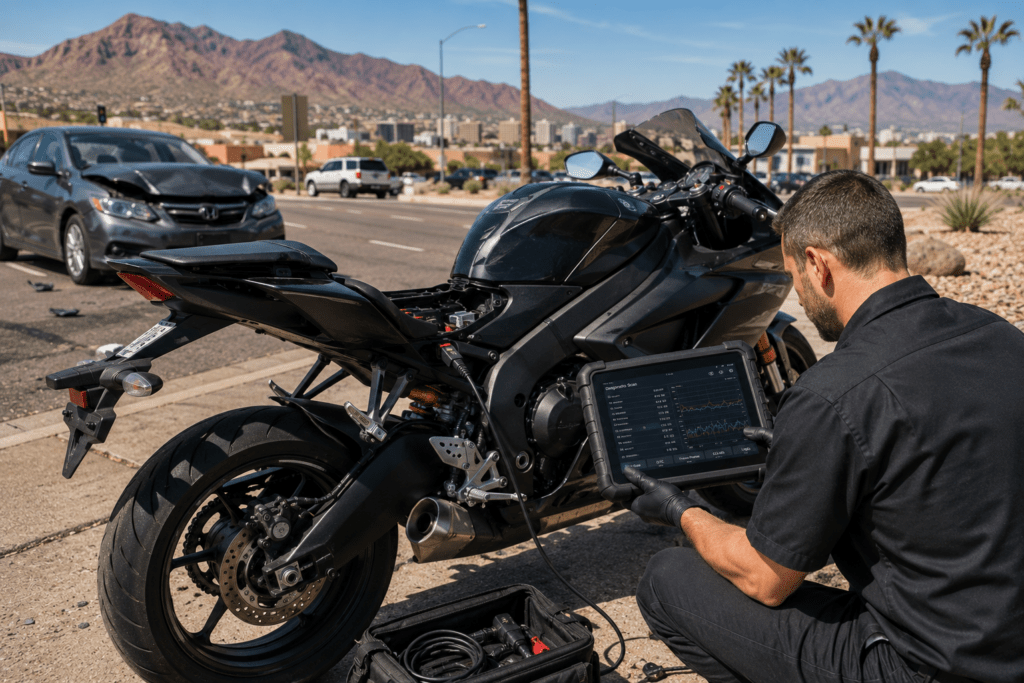
A Phoenix motorcycle ECU ride data investigation often begins by identifying the motorcycle’s Electronic Control Unit and determining what electronic systems were installed on that specific model. Different manufacturers equip motorcycles with different technologies, and each system records different types of operational information. Some motorcycles include advanced rider assistance systems with multiple sensors, while others preserve only basic engine management information.
Because every manufacturer designs its electronics differently, investigators first determine which systems were available before evaluating what electronic evidence may still exist following the collision.
The Electronic Control Unit Continuously Monitors Motorcycle Operation
The Electronic Control Unit serves as the motorcycle’s primary onboard computer. Rather than controlling only the engine, many ECUs communicate with multiple electronic systems throughout the motorcycle while monitoring sensors that measure engine speed, throttle position, wheel speed, braking activity, fuel delivery, and other operating conditions.
A Phoenix motorcycle ECU ride data investigation may include reviewing whether electronic information relating to engine operation, throttle input, traction control, or braking systems remains available after the collision. Depending on the motorcycle manufacturer, investigators may compare this information with physical evidence, roadway conditions, surveillance footage, and witness statements to better understand how the motorcycle was operating before impact.
Because different manufacturers preserve different categories of information, investigators evaluate each motorcycle individually instead of assuming every ECU stores identical records.
Rider Assistance Systems May Generate Additional Information
Many modern motorcycles now include electronic rider assistance features such as traction control, wheelie control, lean-sensitive ABS, cornering ABS, selectable ride modes, cruise control, and electronic suspension systems. These technologies continuously monitor motorcycle performance while making automatic adjustments designed to improve stability and rider control.
A Phoenix motorcycle ECU ride data investigation may therefore include determining whether these electronic systems were active before the collision or whether certain operating conditions triggered automatic responses from the motorcycle. Although these systems are designed primarily to enhance riding performance, they may also generate valuable electronic information that investigators compare with other available evidence.
The information available depends entirely on the motorcycle manufacturer, model, and installed electronic systems.
Connected Motorcycle Technology Continues to Evolve
Some manufacturers now integrate motorcycles with smartphone applications, Bluetooth connectivity, GPS navigation, ride logging, maintenance tracking, and cloud-based rider services. These connected platforms may generate additional digital records beyond those maintained by the motorcycle’s ECU.
A Phoenix motorcycle ECU ride data investigation may therefore include reviewing ride history, connected application activity, Bluetooth records, GPS information, or manufacturer-specific digital services when those systems were active before the collision.
Because connected motorcycle technology varies considerably between manufacturers, investigators generally compare electronic ride information with ECU records, surveillance footage, witness statements, and physical evidence rather than relying on digital information alone.
For additional guidance on preserving important evidence after a collision, read What to Do After a Car Accident in California: What Actually Matters. Although the article discusses motor vehicle collisions generally, many of the same evidence preservation principles also apply following serious motorcycle accidents where electronic vehicle systems may become important.
If you were injured while riding, our Phoenix Motorcycle Accident Lawyer page explains how motorcycle ECU information, physical evidence, surveillance footage, witness statements, and other forms of documentation may become important during the investigation of a motorcycle accident claim.
Why Motorcycle ECU Records Should Be Preserved Promptly
One of the most important aspects of a Phoenix motorcycle ECU ride data investigation is recognizing that electronic information may change after a collision. Diagnostic scans, software updates, repairs, battery replacement, ECU replacement, or continued motorcycle operation may affect the electronic information available for later review.
Because every motorcycle manufacturer stores electronic information differently, investigators often work to identify available ECU records as early as reasonably possible after a collision. Acting promptly may improve the opportunity to preserve original electronic information before repairs or routine servicing modify the available records.
Every Motorcycle Manufacturer Uses Different Electronic Systems
Not every motorcycle records the same type of information. Touring motorcycles, sport bikes, adventure motorcycles, cruisers, and dual-sport models often use different electronic architectures, software platforms, sensors, and rider assistance systems depending on the manufacturer and model year.
A Phoenix motorcycle ECU ride data investigation often begins by identifying the motorcycle’s manufacturer, ECU platform, electronic rider assistance features, and connected technologies. Understanding the motorcycle’s specific electronic systems helps investigators determine what digital information may still exist and what additional sources of evidence should be reviewed alongside the available ECU records.
How Motorcycle ECU Data May Support a Motorcycle Accident Investigation
A Phoenix motorcycle ECU ride data investigation rarely depends on one electronic record alone. Modern motorcycles generate information through multiple onboard systems, including the Electronic Control Unit, anti-lock braking systems, traction control modules, ride mode settings, wheel speed sensors, and, in some models, smartphone connectivity. Investigators often compare these electronic records with surveillance footage, dashcam video, witness statements, police reports, photographs, roadway evidence, and physical damage to develop a more complete understanding of how the collision occurred.
Unlike older motorcycles that relied almost entirely on mechanical systems, today’s motorcycles may preserve valuable operational information during the moments leading up to a crash. When reviewed alongside traditional accident evidence, these electronic records may help investigators reconstruct portions of the ride that would otherwise rely solely on witness recollections.
ECU Data May Help Document Motorcycle Operation
One of the primary reasons investigators review Phoenix motorcycle ECU ride data is to better understand how the motorcycle was operating immediately before the collision. Depending on the manufacturer, the Electronic Control Unit may communicate with numerous sensors monitoring throttle position, engine speed, wheel speed, braking systems, traction control, and other electronic functions throughout the ride.
Investigators may compare available ECU information with roadway evidence, surveillance footage, witness statements, and motorcycle damage to determine whether the electronic records correspond with the physical evidence collected after the crash. While ECU information cannot explain every action taken by the rider, it may provide objective technical information regarding the motorcycle’s operating systems before impact.
Because every manufacturer uses different software and hardware, investigators evaluate each motorcycle individually rather than assuming all ECUs preserve identical information.
ABS and Traction Control Systems May Generate Additional Information
Many motorcycles now include sophisticated rider assistance systems designed to improve stability under difficult riding conditions. Anti-lock braking systems (ABS), traction control, cornering ABS, and lean-sensitive electronic controls continuously monitor motorcycle performance while making automatic adjustments during operation.
A Phoenix motorcycle ECU ride data investigation may therefore include determining whether these systems were active before the collision or whether onboard electronics detected conditions requiring automatic intervention. Depending on the motorcycle, investigators may compare this information with tire marks, roadway conditions, photographs, and witness observations to better understand the motorcycle’s behavior immediately before impact.
These electronic systems are intended to improve rider safety rather than document accidents. Nevertheless, the information they generate may become valuable when evaluated alongside the broader body of available evidence.
Ride Data Should Always Be Compared With Physical Evidence
Although motorcycle electronics continue becoming more advanced each year, digital records alone rarely explain every aspect of a collision. A Phoenix motorcycle ECU ride data investigation is strongest when electronic information is evaluated together with the physical evidence collected from the scene.
Roadway conditions, vehicle damage, helmet inspections, skid marks, debris patterns, surveillance footage, dashcam recordings, police reports, and witness statements frequently provide context that electronic systems cannot capture. Likewise, ECU records may help investigators evaluate technical aspects of motorcycle operation that are not visible in photographs alone.
Understanding how multiple forms of evidence work together can also be helpful following a serious collision. Our article How Personal Injury Settlements Really Work in California explains why preserving electronic records, photographs, medical documentation, witness statements, and repair information often creates a more complete understanding of a personal injury claim.
Arizona Laws That May Become Relevant During a Motorcycle Accident Investigation
Although Phoenix motorcycle ECU ride data may provide valuable electronic information, investigators still evaluate every motorcycle collision using the complete body of available evidence. Arizona traffic laws, roadway conditions, rider conduct, witness testimony, and physical evidence all contribute to understanding how the accident occurred.
Motorcyclists Must Operate Their Motorcycles Reasonably Under Existing Conditions
Like every motor vehicle operator, motorcycle riders are expected to operate their motorcycles safely under existing roadway conditions. During a Phoenix motorcycle ECU ride data investigation, investigators may compare electronic motorcycle records with roadway evidence, witness statements, surveillance footage, and police reports to better understand how the collision developed.
Electronic ride information provides additional context but should never replace the broader investigation. Factors such as traffic conditions, visibility, roadway hazards, weather, and the actions of other drivers frequently play equally important roles when investigators evaluate a motorcycle collision.
Motorcycle Equipment May Also Become Relevant
Modern motorcycles rely on numerous electronic safety systems that work together with mechanical components. During a Phoenix motorcycle ECU ride data investigation, investigators may examine the condition of braking systems, tires, suspension components, lighting equipment, rider assistance technology, and other mechanical systems alongside available ECU information.
According to the National Highway Traffic Safety Administration (NHTSA), proper motorcycle maintenance and equipment remain important components of overall motorcycle safety. Electronic records may supplement these inspections by providing additional information regarding motorcycle operation before the collision.
Multiple Factors May Contribute to a Motorcycle Collision
Motorcycle accidents often involve several contributing circumstances rather than a single cause. Roadway design, visibility, driver behavior, traffic conditions, vehicle movements, and environmental conditions may all influence how a collision develops.
A Phoenix motorcycle ECU ride data investigation therefore includes much more than reviewing onboard electronics. Investigators typically compare ECU information with surveillance footage, dashcam recordings, police reports, witness statements, motorcycle inspections, and physical evidence before developing conclusions regarding the accident.
If you’re recovering from injuries following a motorcycle collision, you may also find Should You Accept a Car Accident Settlement Before Finishing Medical Treatment in Newport Beach? helpful for understanding why preserving medical documentation and completing treatment may become important before resolving a personal injury claim.
H2: What You Can Do to Help Preserve Motorcycle Electronic Evidence
Because motorcycle electronics may continue changing after a collision, documenting available information promptly may improve the overall investigation. A Phoenix motorcycle ECU ride data investigation often benefits from preserving both electronic records and traditional accident evidence before repairs or additional motorcycle operation affect the available information.
Avoid Resetting or Servicing the Motorcycle Immediately
Following a collision, riders sometimes disconnect the battery, clear diagnostic codes, replace damaged electronic components, or begin repairs before electronic information has been documented. If it is safe and practical to do so, avoiding unnecessary changes to the motorcycle’s electronic systems may help preserve available Phoenix motorcycle ECU ride data for later review.
Maintaining the motorcycle in its post-collision condition, when possible, allows investigators to evaluate available electronic information alongside the motorcycle’s physical condition.
Preserve Traditional Evidence Alongside Electronic Records
Motorcycle ECU information becomes significantly more valuable when it is compared with photographs, roadway evidence, helmet inspections, surveillance footage, witness statements, and police reports. If it is safe to do so, photograph the motorcycle, surrounding roadway, traffic control devices, skid marks, debris, weather conditions, nearby businesses, and any available surveillance cameras.
These photographs may later be compared with Phoenix motorcycle ECU ride data, allowing investigators to evaluate how the motorcycle’s electronic information corresponds with the physical evidence collected from the collision scene.
Frequently Asked Questions About Motorcycle ECU and Ride Data
What is motorcycle ECU ride data?
Phoenix motorcycle ECU ride data generally refers to electronic information generated by a motorcycle’s Electronic Control Unit (ECU) and other onboard systems while the motorcycle is operating. Depending on the manufacturer and model, this information may relate to engine performance, throttle position, wheel speed, braking systems, rider assistance technology, and other electronic functions. Although ECU records do not determine fault by themselves, they may provide investigators with valuable technical information when evaluated alongside other available evidence.
Do all motorcycles record the same electronic information?
No. Every motorcycle manufacturer uses different electronic systems, software platforms, and rider assistance technology. During a Phoenix motorcycle ECU ride data investigation, investigators first identify the motorcycle’s manufacturer, model, and installed electronic systems before determining what information may be available. Some motorcycles preserve more electronic information than others, particularly newer models equipped with advanced rider assistance features.
Can ECU data prove how a motorcycle accident happened?
Not by itself. Phoenix motorcycle ECU ride data may provide valuable technical information regarding how certain onboard systems were operating before the collision, but investigators generally compare that information with surveillance footage, dashcam recordings, witness statements, police reports, roadway evidence, and motorcycle inspections before developing conclusions about how the crash occurred.
Can motorcycle electronics be changed after a collision?
Yes. Diagnostic scans, software updates, repairs, replacement components, battery disconnection, or continued motorcycle operation may affect some electronic records depending on the manufacturer and system design. Preserving Phoenix motorcycle ECU ride data as early as reasonably possible may improve the opportunity to review original electronic information before changes occur.
Why should electronic motorcycle evidence be preserved?
Modern motorcycles rely on sophisticated electronic systems that continuously monitor motorcycle operation throughout a ride. Preserving Phoenix motorcycle ECU ride data promptly may help investigators compare electronic information with physical evidence, witness statements, surveillance footage, and other documentation while the available records remain in their original condition.
A Phoenix motorcycle ECU ride data investigation may provide valuable electronic information that helps investigators better understand how a motorcycle was operating before a collision. Engine management systems, rider assistance technology, Electronic Control Units, ABS modules, traction control systems, and connected motorcycle services may all generate digital information that contributes to a broader understanding of the accident.
While motorcycle electronics can provide important technical insight, they represent only one component of a comprehensive accident investigation. Investigators generally compare ECU information with surveillance footage, dashcam video, witness statements, police reports, roadway evidence, helmet inspections, motorcycle damage, and physical evidence collected from the scene. Looking at these sources together frequently provides a more complete understanding of the collision than relying on any single form of evidence alone.
Because motorcycle electronics may continue changing after a collision through repairs, software updates, or additional motorcycle operation, preserving available information promptly may improve the opportunity to review original records. Whether the motorcycle uses advanced rider assistance technology, connected smartphone services, or sophisticated engine management systems, identifying available Phoenix motorcycle ECU ride data early may become an important part of documenting the circumstances surrounding a motorcycle accident.
Connect With Super Woman Super Lawyer
If you or someone you love has been injured in a motorcycle accident, understanding what electronic evidence may be available can feel overwhelming. At Super Woman Super Lawyer, we help clients understand how motorcycle ECU records, ride data, surveillance footage, witness statements, physical evidence, and other documentation may become important during the investigation of a motorcycle accident claim.
You can also learn more about our services by visiting our Phoenix Motorcycle Accident Lawyer page.
Connect with Super Woman Super Lawyer today.
Online Form: Request a case review
Call Now: 800.800.6916
Live Chat: Speak with a legal professional instantly
 Maryam Parman