An Oakland motorcycle lane change accident often occurs within only a few seconds, yet determining exactly what happened before impact may require a detailed investigation afterward. Drivers frequently report that they never saw the motorcycle before changing lanes, while riders may believe they were clearly visible throughout the maneuver. Because motorcycles occupy less space than passenger vehicles, questions regarding blind spots, lane positioning, speed, and visibility frequently become central issues following these collisions. Investigators often rely on photographs, motorcycle damage, surveillance footage, witness statements, helmet camera recordings, and other evidence to better understand how the crash occurred.
At Super Woman Super Lawyer, we understand that motorcycle accident investigations often involve unique forms of evidence not typically present in passenger vehicle collisions. An Oakland motorcycle lane change accident investigation may include helmet camera footage, motorcycle inspections, roadway evidence, dashcam recordings, surveillance video, witness statements, police reports, photographs, and medical documentation generated throughout recovery. Looking at these sources together often provides investigators with a more complete understanding of how the collision developed than relying on any single account alone.
Motorcyclists travel throughout Oakland every day along Interstate 880, Interstate 580, Highway 24, MacArthur Boulevard, International Boulevard, Broadway, Grand Avenue, and numerous city streets. Heavy commuter traffic, frequent lane changes, freeway merging, and congested urban roadways often create situations where motorcycles and passenger vehicles operate closely together. Because motorcycles are smaller and more maneuverable than larger vehicles, lane-change collisions sometimes occur when drivers fail to recognize a rider traveling nearby.
According to the National Highway Traffic Safety Administration (NHTSA), motorcyclists remain among the most vulnerable roadway users because they lack the structural protection available to occupants of passenger vehicles. Preserving available evidence immediately after a collision may help investigators better understand the circumstances surrounding the accident before important details change or disappear.
This article explains why an Oakland motorcycle lane change accident may become disputed, what evidence riders often preserve after a collision, what medical documentation may become important during recovery, and why maintaining organized records may help throughout the claims process.
Why Lane-Change Motorcycle Crashes Can Be Hard to Prove
Motorcycle lane-change collisions often involve different perspectives regarding what happened immediately before impact. Drivers may report that the motorcycle appeared suddenly or remained hidden within a blind spot, while riders frequently state they maintained a consistent lane position before the other vehicle entered their path. Because both individuals observe the collision from different vantage points, investigators often compare several independent sources of evidence before reconstructing the sequence of events.
An Oakland motorcycle lane change accident investigation frequently begins by examining roadway design, lane markings, traffic conditions, visibility, vehicle positions, and witness observations immediately before the collision. Rather than relying on one person’s memory alone, investigators compare photographs, physical evidence, video recordings, and police reports to better understand how the crash developed.
Because every roadway and traffic situation is different, investigators evaluate each lane-change collision individually.
Driver Claims About Blind Spots or Not Seeing the Rider
One of the most common issues following a lane-change motorcycle collision involves a driver’s statement that the motorcycle was not visible before the lane change occurred. Blind spots, surrounding traffic, changing light conditions, larger vehicles, roadway curves, or distractions may all influence what the driver observed before beginning the maneuver.
An Oakland motorcycle lane change accident investigation often compares these statements with photographs, surveillance footage, dashcam recordings, witness observations, and roadway evidence. Looking at multiple independent sources together frequently provides investigators with a more complete understanding of visibility conditions than relying on one explanation alone.
Because motorcycles occupy a smaller visual profile than passenger vehicles, investigators frequently examine surrounding traffic conditions carefully.
Rider Position, Speed, and Lane Placement Questions
Another issue that commonly arises involves the motorcycle’s location within its travel lane before impact. An Oakland motorcycle lane change accident investigation may evaluate where the rider was positioned relative to surrounding traffic, lane markings, nearby vehicles, and roadway geometry before the collision occurred.
Investigators often compare photographs, witness statements, helmet camera recordings, surveillance footage, and physical evidence to better understand how the rider approached the collision. Speed, traffic flow, lane positioning, and roadway design may all become relevant factors during the investigation.
Rather than relying on assumptions, investigators generally compare all available evidence before drawing conclusions.
Why Impact Location Can Matter in the Claim Review
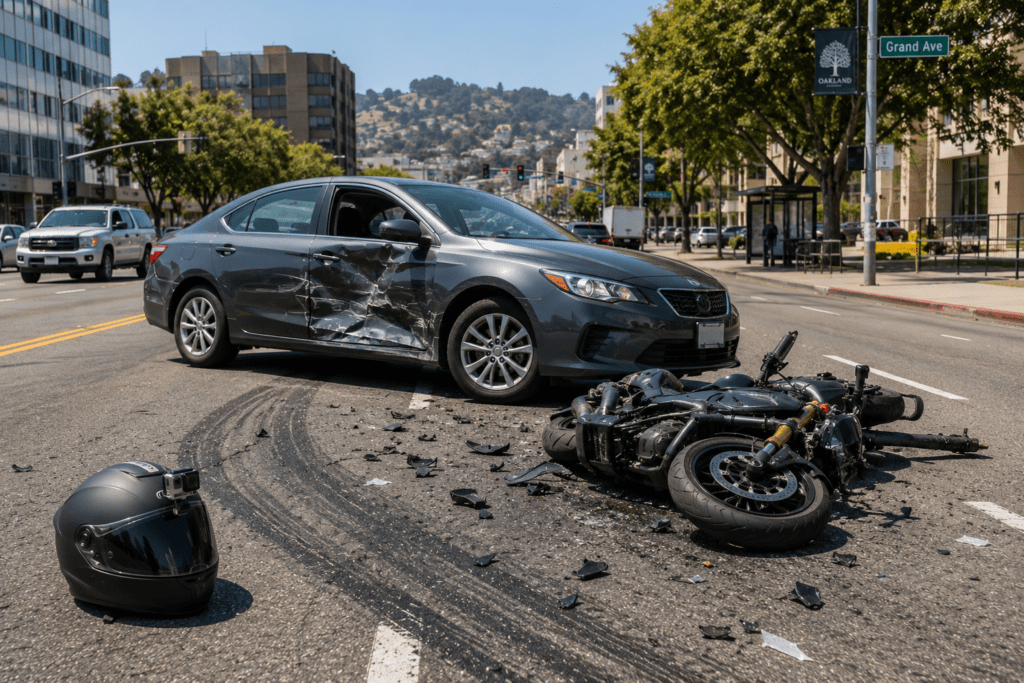
The location of damage on both the motorcycle and the passenger vehicle frequently provides valuable information regarding how the collision developed. During an Oakland motorcycle lane change accident investigation, investigators may examine scrape marks, impact points, broken lighting components, damaged mirrors, fairings, foot pegs, handlebars, and other physical evidence remaining after the collision.
These damage patterns are often compared with roadway evidence, witness observations, surveillance recordings, and police reports to reconstruct the relative positions of the motorcycle and passenger vehicle before impact.
Looking at multiple forms of evidence together often provides investigators with a more complete understanding than relying on vehicle damage alone.
For additional guidance on preserving important evidence after a collision, read What to Do After a Car Accident in California: What Actually Matters. Many of the same documentation principles discussed in that guide also apply following motorcycle accidents involving lane changes and visibility disputes.
If you were injured while riding, our Oakland Motorcycle Accident Lawyer page explains how helmet camera footage, motorcycle inspections, witness statements, medical documentation, and other evidence may become important during the evaluation of a motorcycle accident claim.
Evidence Riders Should Preserve After a Lane-Change Collision
One of the most important aspects of an Oakland motorcycle lane change accident investigation is preserving available evidence before it changes. Motorcycles are often removed from the roadway quickly after a collision, damaged gear may be discarded, and roadway evidence may disappear as traffic resumes. Maintaining organized documentation from the beginning often provides investigators with a stronger foundation when reviewing how the crash occurred.
Motorcycle Damage, Gear Damage, and Vehicle Contact Points
Physical evidence found on the motorcycle itself frequently becomes one of the first areas investigators evaluate. An Oakland motorcycle lane change accident investigation often includes examining fairings, handlebars, mirrors, foot controls, frame components, helmets, riding jackets, gloves, boots, and other protective equipment for damage consistent with the collision.
Photographs documenting the condition of both the motorcycle and the rider’s protective gear before repairs or replacement may provide valuable information when compared with the remaining evidence gathered during the investigation.
Evidence Riders Should Preserve After a Lane-Change Collision
An Oakland motorcycle lane change accident investigation often depends on preserving both physical and electronic evidence before it changes. Motorcycles are frequently removed from the roadway shortly after a collision, damaged riding gear may be discarded, weather may alter roadway conditions, and surveillance systems may eventually overwrite available recordings. Documenting the collision scene as early as reasonably possible may improve the opportunity to review original evidence while conditions remain substantially unchanged.
Unlike many passenger vehicle collisions, motorcycle accidents often produce evidence unique to the rider, including protective gear, helmet-mounted cameras, and distinctive impact patterns on the motorcycle itself. Investigators generally compare these materials with photographs, witness statements, roadway evidence, and police reports before reconstructing the collision.
Motorcycle Damage, Gear Damage, and Vehicle Contact Points
The motorcycle itself frequently preserves important evidence regarding how the collision occurred. An Oakland motorcycle lane change accident investigation commonly includes examining damaged fairings, mirrors, handlebars, foot pegs, brake levers, turn signals, fuel tanks, saddlebags, and frame components for evidence of the initial impact.
Protective riding equipment may also provide valuable information. Helmets, jackets, gloves, boots, riding pants, and protective armor sometimes display damage patterns consistent with the rider’s movements during the collision.
Investigators often compare this physical evidence with photographs, roadway markings, and witness statements to better understand the sequence of events before impact.
Helmet Camera, Dashcam, and Nearby Business Footage
Many motorcyclists now use helmet-mounted action cameras that continuously record roadway conditions throughout the ride. Passenger vehicles, commercial trucks, and nearby businesses may also operate dashcams or surveillance systems capable of recording portions of the collision.
An Oakland motorcycle lane change accident investigation may therefore include reviewing video from several different perspectives. Helmet camera footage may document the rider’s lane position, surrounding traffic, roadway conditions, and the moments immediately before impact. Nearby business surveillance systems or vehicle dashcams may provide additional viewpoints that help investigators compare the movements of both the motorcycle and the passenger vehicle.
Looking at multiple recordings together frequently provides a more complete reconstruction than relying on one camera alone.
Witness Names, Police Report Details, and Scene Photos
Witnesses often observe different portions of a lane-change collision depending on where they were traveling before the accident. Drivers in adjacent lanes, passengers, pedestrians, cyclists, or nearby business employees may each provide valuable observations regarding traffic conditions and vehicle movements.
An Oakland motorcycle lane change accident investigation frequently includes preserving witness names, contact information, police report details, and photographs documenting the roadway before conditions change. Investigators often compare these independent sources with physical evidence and video recordings to better understand how the collision developed.
Understanding how multiple forms of evidence work together can also be helpful after any serious collision. Our article How Personal Injury Settlements Really Work in California explains why preserving photographs, medical documentation, witness statements, repair records, and electronic evidence frequently provides a stronger understanding of a personal injury claim.
Medical Documentation After an Oakland Motorcycle Crash
Medical documentation frequently becomes one of the largest portions of the claim file following a motorcycle collision. An Oakland motorcycle lane change accident investigation often continues while injured riders receive emergency treatment, diagnostic imaging, follow-up care, specialist evaluations, physical therapy, or surgical treatment depending on the injuries sustained.
Because many motorcycle injuries continue developing throughout recovery, maintaining organized medical records may provide a more complete picture than relying only on emergency treatment documentation.
Emergency Care, Imaging, and Specialist Follow-Ups
Emergency medical treatment often begins at the accident scene or shortly after arrival at the hospital. Ambulance reports, emergency department evaluations, physician notes, X-rays, CT scans, MRI studies, discharge instructions, and specialist referrals frequently become part of the overall medical record.
An Oakland motorcycle lane change accident claim may therefore include preserving emergency medical documentation together with follow-up physician notes, orthopedic evaluations, neurological assessments, physical therapy records, and imaging studies generated throughout recovery.
Keeping these records organized chronologically often provides a clearer understanding of how treatment progressed after the collision.
Road Rash, Fractures, Soft Tissue Injuries, and Mobility Limits
Motorcyclists often sustain injuries that differ from those commonly experienced by occupants of passenger vehicles. Depending on the circumstances of the collision, treatment may involve fractures, road rash, ligament injuries, soft tissue damage, shoulder injuries, spinal injuries, or other orthopedic conditions.
An Oakland motorcycle lane change accident investigation may include preserving medical records documenting these injuries together with rehabilitation plans, mobility restrictions, assistive devices, and physician recommendations regarding recovery.
Missed Work, Transportation Problems, and Daily Activity Changes
Motorcycle injuries often affect more than physical recovery alone. Many riders experience temporary or long-term changes involving employment, transportation, childcare responsibilities, household activities, or other aspects of everyday life.
An Oakland motorcycle lane change accident claim may therefore include employment records, missed work documentation, transportation expenses, appointment calendars, and personal records describing how the injuries affected normal daily activities.
If you’re continuing medical treatment following a motorcycle collision, you may also find Should You Accept a Car Accident Settlement Before Finishing Medical Treatment in Newport Beach? helpful for understanding why preserving medical documentation and completing treatment may become important before resolving a personal injury claim.
Frequently Asked Questions About Motorcycle Lane-Change Accidents
Why are lane-change motorcycle accidents often disputed?
An Oakland motorcycle lane change accident frequently involves different accounts regarding what happened immediately before impact. Drivers may report that they did not see the motorcycle before changing lanes, while riders often believe they remained visible throughout the maneuver. Investigators generally compare photographs, motorcycle damage, helmet camera footage, witness statements, surveillance recordings, and roadway evidence before developing a complete understanding of how the collision occurred.
What evidence should riders preserve after a lane-change collision?
An Oakland motorcycle lane change accident investigation often benefits from preserving photographs of the motorcycle, damaged riding gear, roadway conditions, lane markings, skid marks, vehicle damage, witness information, police reports, helmet camera recordings, dashcam footage, and surveillance video when available. Keeping this documentation organized may help investigators reconstruct the events leading up to the collision.
Can helmet camera footage become important after a motorcycle accident?
Yes. Many riders use helmet-mounted cameras that continuously record traffic conditions during a ride. An Oakland motorcycle lane change accident investigation may compare helmet camera footage with dashcam recordings, business surveillance systems, witness statements, and physical evidence to better understand vehicle positioning, lane changes, and traffic conditions immediately before the crash.
Why do drivers often mention blind spots after a motorcycle collision?
Motorcycles occupy a smaller visual profile than passenger vehicles, and blind spots frequently become part of the discussion following a lane-change collision. During an Oakland motorcycle lane change accident investigation, investigators often evaluate visibility using roadway evidence, photographs, vehicle positions, witness observations, and available video rather than relying solely on one driver’s recollection.
Why should medical records remain organized throughout recovery?
Medical documentation often continues developing long after the collision itself. An Oakland motorcycle lane change accident claim may include emergency treatment records, physician notes, diagnostic imaging, specialist evaluations, physical therapy documentation, employment records, and other materials created throughout recovery. Organizing these records chronologically often provides a clearer understanding of the progression of treatment.
Insurance Issues When a Driver Says the Motorcycle Was Hard to See
Insurance questions frequently arise after lane-change motorcycle collisions because different parties often provide different descriptions of what occurred before impact. An Oakland motorcycle lane change accident investigation may continue while insurance companies review photographs, police reports, witness statements, surveillance footage, helmet camera recordings, and medical documentation before evaluating the claim.
Because investigations often continue while treatment progresses, maintaining organized documentation throughout the process may help preserve important information.
Recorded Statement Questions About Visibility and Lane Position
Insurance companies sometimes request recorded statements shortly after a motorcycle collision. These conversations often include questions regarding lane position, surrounding traffic, speed, visibility, lighting conditions, weather, and what each person observed before the lane change occurred.
An Oakland motorcycle lane change accident claim frequently involves maintaining organized records of insurance communications, claim numbers, adjuster contact information, letters, and requests for additional documentation while the investigation continues.
Attempts to Shift Fault Onto the Rider
Lane-change collisions sometimes involve differing opinions regarding visibility, motorcycle positioning, or surrounding traffic conditions. During an Oakland motorcycle lane change accident investigation, investigators generally compare physical evidence, photographs, witness statements, surveillance recordings, helmet camera footage, and roadway evidence before evaluating how the collision developed.
Because every accident presents unique circumstances, investigators review the complete body of available evidence rather than relying on one explanation alone.
Settlement Offers Before Video or Witness Evidence Is Reviewed
Helmet camera recordings, surveillance footage, witness interviews, and other evidence are not always immediately available following a motorcycle collision. An Oakland motorcycle lane change accident investigation may therefore continue while additional evidence is still being gathered and reviewed.
Medical treatment may also continue throughout this period. Diagnostic imaging, specialist consultations, physical therapy, rehabilitation, and follow-up evaluations frequently generate additional documentation as recovery progresses. Maintaining organized records throughout this process may help preserve important information while the investigation continues.
An Oakland motorcycle lane change accident investigation often requires considerably more documentation than simply reviewing vehicle damage after the collision. Helmet camera footage, motorcycle inspections, roadway evidence, surveillance recordings, witness statements, police reports, photographs, and medical documentation may all contribute to understanding how the crash occurred.
Although no single piece of evidence usually explains every aspect of a motorcycle collision, investigators generally compare multiple independent sources before reconstructing the sequence of events. Looking at physical evidence together with electronic recordings and witness observations frequently provides a more complete understanding than relying on one form of documentation alone.
Because roadway conditions, damaged motorcycles, surveillance footage, and medical records may all change over time, preserving available documentation as early as reasonably possible may improve the opportunity to review original evidence throughout the claims process. Whether the collision occurred on a freeway, city street, or neighborhood roadway, maintaining organized records may become an important part of documenting what happened.
Connect With Super Woman Super Lawyer
If you or someone you love has been injured in a motorcycle collision, understanding what evidence may be available can feel overwhelming. At Super Woman Super Lawyer, we help clients understand how helmet camera footage, motorcycle inspections, witness statements, medical records, photographs, police reports, and other evidence may become important during the evaluation of a motorcycle accident claim.
You can also learn more about our services by visiting our Oakland Motorcycle Accident Lawyer page.
Online Form: Request a case review
Call Now: 800.800.6916
Live Chat: Speak with a legal professional instantly
 Maryam Parman