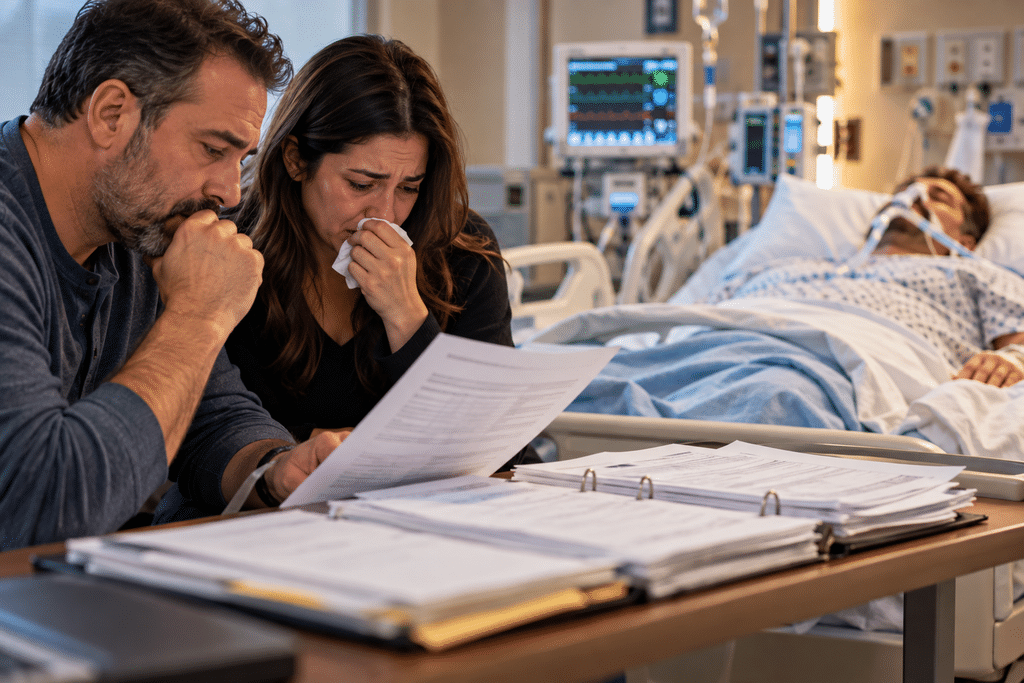
Bakersfield wrongful death after car accident cases can become particularly complex when the injured person does not die at the crash scene but instead receives medical treatment for days, weeks, or months before passing away. During that period, the medical history may include emergency transportation, surgery, intensive care, hospitalization, rehabilitation, transfers between facilities, specialist treatment, medication changes, complications, and repeated evaluations. When a family later pursues a wrongful death claim, the medical timeline between the collision and the death can become one of the most important parts of the investigation because it documents what happened during the period separating the original crash from the later loss.
The passage of time does not by itself determine whether a later death is related to an earlier motor vehicle collision. That is a medical and legal question that must be evaluated using the evidence. For a Bakersfield wrongful death after car accident claim involving extended treatment, records from each stage of care may help qualified medical professionals and attorneys understand what happened after the crash, how the patient’s condition changed, what complications developed, and what treating providers documented regarding diagnoses, procedures, rehabilitation, and ongoing care.
California law separately identifies categories of people who may have standing to pursue a wrongful death action. California Code of Civil Procedure section 377.60 addresses who may bring a California wrongful death action. Whether a particular family member qualifies depends on the circumstances, so eligibility should be evaluated rather than assumed solely from the person’s relationship to the individual who died.
If your family is dealing with the death of a loved one following extended treatment after a Bakersfield collision, our Bakersfield Wrongful Death Lawyer page provides additional information about how Super Woman Super Lawyer can evaluate the available medical, accident, insurance, and financial evidence. In a Bakersfield wrongful death after car accident claim, building a complete chronology early may help identify which records have already been obtained and which remain outstanding.
Connect with Super Woman Super Lawyer today through our Online Form, call 800.800.6916, or start a Live Chat. A Bakersfield wrongful death after car accident investigation involving prolonged treatment may require evidence from numerous medical facilities and other organizations, and preserving those records before important information becomes harder to locate can be valuable.
Building the Medical Timeline From the Crash to the Death
A medical timeline can be especially important when significant time passes between a collision and a person’s death. Rather than focusing only on the emergency room visit and the final medical records, a Bakersfield wrongful death after car accident investigation may require reviewing the entire period of treatment in chronological order. This can help distinguish what happened immediately after the crash from later medical developments.
The timeline may identify when diagnoses were made, when procedures occurred, how the patient’s condition changed, whether the person moved between facilities, what specialists became involved, and whether complications developed during recovery. A Bakersfield wrongful death after car accident file may also reveal gaps requiring additional records before the complete treatment sequence can be evaluated.
Emergency Treatment, Surgery, and Hospitalization
The timeline generally begins with the collision itself and the earliest medical response. Ambulance records may document the patient’s condition at the scene, observations during transport, interventions provided by emergency personnel, and the receiving hospital. Emergency department records may then document examinations, diagnostic imaging, laboratory testing, consultations, and initial diagnoses. These early records often establish the first medical chapter of a Bakersfield wrongful death after car accident claim.
If surgery followed, operative reports, anesthesia records, postoperative notes, intensive care documentation, and specialist records may become part of the Bakersfield wrongful death after car accident file. These documents can provide important information about the injuries physicians were treating and the patient’s condition during the earliest phase of care. When several procedures occur over an extended hospitalization, maintaining them chronologically can make the treatment history substantially easier to understand.
Hospitalization can generate an enormous volume of documentation. Nursing notes, physician progress notes, medication administration records, laboratory results, imaging reports, respiratory documentation, consultation notes, and discharge or transfer summaries may each address different aspects of the patient’s condition. For a Bakersfield wrongful death after car accident investigation, the goal is not to assume every page carries equal significance but to preserve the complete record so qualified reviewers can identify what matters.
The federal U.S. Department of Health and Human Services guidance on medical records provides information about access to health information. After a patient’s death, access can involve additional rules concerning personal representatives and authorized individuals, making it important for families to determine what documentation each provider requires before releasing records.
Rehabilitation, Facility Transfers, and Follow-Up Care
Not every seriously injured crash victim remains at the same hospital throughout treatment. A patient may be transferred from an acute-care hospital to an inpatient rehabilitation facility, skilled nursing facility, long-term acute-care hospital, or another treatment setting. Later, outpatient specialists, therapists, home health providers, or other professionals may become involved. Each transition may generate a separate set of records relevant to a Bakersfield wrongful death after car accident claim.
These transitions can make the medical history harder to assemble because no single facility necessarily possesses the entire record. The discharge summary from one facility may identify where the patient was transferred, while the receiving facility creates a separate chart beginning on the admission date. A Bakersfield wrongful death after car accident timeline should therefore account for both sides of important transfers whenever records are available.
Preserve discharge summaries, transfer orders, rehabilitation admission records, therapy evaluations, follow-up appointment records, and specialist reports. Together, these documents may establish continuity between one stage of care and the next. They may also show how treatment goals, mobility, functional abilities, and medical concerns changed throughout recovery.
When families are already coping with prolonged hospitalization and later loss, tracking records from several providers can be overwhelming. Creating a chronological list of facilities, physicians, treatment dates, and transfers can make the collection process more manageable and help identify missing periods in a Bakersfield wrongful death after car accident file.
Changes in Diagnosis, Condition, and Treatment Recommendations
A patient’s condition may change significantly during extended treatment. Early records may focus primarily on traumatic injuries from the collision, while later records may address complications, infections, respiratory issues, neurological changes, mobility problems, or other conditions identified during hospitalization and rehabilitation. Medical professionals—not family members, insurers, or attorneys—should determine the clinical significance of those developments.
A Bakersfield wrongful death after car accident investigation may therefore require more than locating a single diagnosis. The sequence matters. Records can show when a condition first appeared, how providers responded, what testing was ordered, whether treatment recommendations changed, and what physicians documented about the patient’s progress or decline.
This is also why isolated excerpts from a medical chart can be misleading. One note may capture only a single point in a long course of treatment. Reviewing the broader chronology of a Bakersfield wrongful death after car accident claim may provide necessary context for understanding how the patient’s medical condition evolved.
Families organizing the early stages of a claim may also find What to Do After a Car Accident in California: What Actually Matters useful for understanding why accident reports, photographs, insurance information, and medical documentation should be preserved alongside the treatment history.
Medical Records That May Help Explain a Bakersfield Wrongful Death After Car Accident
The medical file in a Bakersfield wrongful death after car accident claim involving extended treatment may span multiple healthcare systems and contain thousands of pages. Organizing those records by provider and date can help transform a large collection of documents into a usable chronology. The records may also identify additional providers or facilities that were not obvious when the family first began collecting documentation.
The purpose is not to search for one isolated sentence that appears to resolve every medical question. Instead, records from emergency responders, hospitals, specialists, rehabilitation facilities, imaging departments, pharmacies, and other providers may collectively help qualified reviewers understand the sequence from the collision through later treatment and death.
Ambulance, Hospital, Specialist, and Rehabilitation Records
Ambulance documentation may establish the earliest medical observations following the collision. Hospital records then document emergency evaluation, inpatient care, surgeries, consultations, medications, and other treatment. Specialist records may address particular injuries or complications, while rehabilitation records can document mobility, function, therapy goals, and progress after acute hospitalization.
For a Bakersfield wrongful death after car accident claim, it can be useful to maintain a provider index identifying each facility or practice, dates of treatment, type of care provided, whether records have been requested, and whether they have been received. That organizational step may help prevent an important facility or treatment period from being overlooked.
Medical bills should generally be preserved separately from the clinical records while remaining connected to the same treatment timeline. A bill can document charges and dates but usually does not provide the same clinical detail as the corresponding medical chart. Both categories may nevertheless become relevant to a Bakersfield wrongful death after car accident investigation.
Imaging, Procedures, Medication, and Complication Documentation
Diagnostic imaging may include X-rays, CT scans, MRI studies, ultrasounds, or other testing depending on the patient’s injuries and medical course. Preserve imaging reports and information about where the underlying studies are stored when available. The written report provides one form of documentation, while the actual study may sometimes become relevant to a qualified medical review.
Procedure and operative reports can document surgeries or interventions performed during hospitalization. Medication records may help establish how treatment changed over time. Laboratory results, physician notes, nursing documentation, and specialist consultations may record complications or changes in the patient’s condition. These materials may become particularly important when a Bakersfield wrongful death after car accident claim involves an extended and medically complicated period between the crash and death.
These records should not be interpreted in isolation by someone without appropriate medical qualifications. Their value is that they preserve what healthcare professionals observed, diagnosed, tested, and treated throughout the course of care.
The National Library of Medicine’s MedlinePlus provides general information about medical records and the information commonly contained in a health record. The specific records needed for an individual Bakersfield wrongful death after car accident claim will depend on the patient’s actual treatment and the medical questions raised by the case.
Death Certificate, Medical Examiner Materials, and Prior Medical History
When a crash victim dies after extended treatment, the death certificate becomes an important record, but it should not automatically be treated as the only medical evidence relevant to the relationship between the collision and the death. A Bakersfield wrongful death after car accident investigation may still require review of the treatment history that preceded it.
The California Department of Public Health provides information about California vital records, including death certificates. Depending on the circumstances surrounding the death, additional records may exist through the appropriate coroner or medical examiner agency.
Prior medical history may also become relevant, particularly when an insurer questions whether another health condition contributed to the death. That does not mean every record from the person’s lifetime is automatically relevant. Requests should be evaluated in light of the issues actually raised by the Bakersfield wrongful death after car accident claim.
The important goal is to distinguish the person’s pre-collision medical condition from the injuries, treatment, complications, and functional changes documented after the crash. A chronological before-and-after comparison may help qualified reviewers evaluate those issues without assuming that a preexisting condition either caused the later death or was irrelevant to it.
Insurance Questions in a Bakersfield Wrongful Death After Car Accident
Insurance questions can become more complicated when a crash victim survives the initial collision but dies after an extended period of medical treatment. In a Bakersfield wrongful death after car accident claim, an insurer may review not only how the original collision occurred but also the medical history that developed afterward. The longer and more medically complex the treatment period becomes, the more important it may be to maintain an organized chronology connecting the crash, hospitalization, rehabilitation, later medical developments, and death.
That does not mean a family must independently prove a medical connection by interpreting complex records. Questions about diagnosis, complications, and cause of death should be evaluated by qualified medical professionals. From an evidence standpoint, however, preserving the complete medical history may allow those professionals to review the sequence rather than relying on isolated records or assumptions about what occurred during the months after the collision.
Questions About the Relationship Between the Crash and Later Death
When death occurs weeks or months after a motor vehicle collision, an insurer may examine whether the later death was related to injuries sustained in the crash, complications associated with those injuries or their treatment, an unrelated medical condition, or some combination of factors. The answer depends on the individual medical history and should not be assumed simply because time passed between the collision and the death.
A Bakersfield wrongful death after car accident investigation may therefore involve comparing the person’s health and function before the collision with the medical course afterward. Emergency records can document the initial injuries. Surgical and hospital records can show what treatment followed. Rehabilitation records may document functional changes, while later hospital or specialist records may identify complications or changes in condition. The death certificate and other appropriate medical documentation then become part of the broader chronology.
This before-and-after comparison can be particularly important when the person had significant health conditions before the collision. A preexisting condition does not by itself answer whether the crash contributed to the later medical course. Similarly, the fact that someone survived for an extended period after the collision does not by itself establish or eliminate a connection. The relevant medical evidence in a Bakersfield wrongful death after car accident claim must be evaluated in context.
Families should also preserve accident evidence that exists independently of the medical file. Police reports, crash photographs, witness information, vehicle damage records, and available video may help document how the original collision occurred, while medical records address the person’s subsequent treatment. Keeping these categories organized separately but within one central claim file can make the chronology easier to follow.
Requests for Broader Medical Records or Authorizations
When a Bakersfield wrongful death after car accident claim involves extended treatment, an insurance company may request medical records or ask a family member or authorized representative to sign a medical authorization. Some requests may seek records directly related to the crash and subsequent treatment, while others may seek a broader medical history.
Medical authorization forms should be read carefully before they are signed. The scope of the authorization can matter, including which providers are covered, what types of records can be obtained, and the period of medical history included. Families should not assume that every authorization form has the same language or reaches only crash-related treatment.
The U.S. Department of Health and Human Services guidance on health information privacy explains how federal privacy rules protect health information and provides information concerning access to medical records. After a patient’s death, additional rules may affect who can act as the deceased person’s personal representative for purposes of accessing protected health information.
For a Bakersfield wrongful death after car accident claim, keeping a log of medical-record requests can be useful. The log might identify the provider, dates of treatment, date records were requested, date they were received, and whether billing records were requested separately. When treatment occurred at several hospitals or rehabilitation facilities, this organizational step can help reveal missing periods before the claim is evaluated or resolved.
Families should also keep copies of medical authorizations provided to an insurer rather than signing and returning the only copy. Insurance correspondence, emails, claim portal messages, and letters requesting additional medical information should remain with the broader Bakersfield wrongful death after car accident file.
Settlement Discussions That May Have Begun During Treatment
A particularly important issue can arise when insurance settlement discussions began while the injured person was still alive and receiving treatment. Before the later death, the claim may have focused on medical bills, lost income, pain, disability, rehabilitation, or other losses associated with a nonfatal injury. The person’s subsequent death can create different legal and factual questions that should be evaluated before additional documents are signed.
A Bakersfield wrongful death after car accident claim should therefore preserve settlement offers, demand correspondence, releases, insurer emails, recorded communications, and other claim documents created during the treatment period. The fact that negotiations began earlier does not mean the later claim should simply continue under the same assumptions.
The exact effect of a prior settlement, signed release, or other agreement depends on its language and the circumstances. Families should not assume that a document either does or does not affect later rights without having the actual document evaluated. This is particularly important when multiple claims, parties, or insurance policies may be involved.
Our article How Personal Injury Settlements Really Work in California provides additional information about documentation and settlement timing in California injury claims. When the injured person later dies, however, a Bakersfield wrongful death after car accident claim presents additional issues that require their own evaluation.
Family and Financial Records in a Bakersfield Wrongful Death After Car Accident Claim
Medical evidence may explain the treatment history, but a Bakersfield wrongful death after car accident claim can also involve records documenting the financial and household consequences of the loss. Families may need to organize medical bills, funeral expenses, employment records, benefit information, tax documents, household records, and communications with insurers or government agencies.
These records often come from many different sources and may arrive over an extended period. Creating one central file—whether physical, digital, or both—can reduce the risk that important documents are lost while the family is managing the practical and emotional consequences of the death.
Medical Bills and Funeral-Related Expenses
Extended medical treatment can generate bills from numerous organizations. A single hospitalization may involve separate charges from the hospital, physicians, surgeons, anesthesiologists, radiologists, laboratories, ambulance providers, rehabilitation facilities, pharmacies, or medical equipment suppliers. Bills may also arrive weeks after the corresponding treatment.
For a Bakersfield wrongful death after car accident claim, it can be helpful to organize medical bills by provider and date while keeping them connected to corresponding treatment records. Explanation-of-benefits statements, insurance payments, balances, collection notices, and other billing communications may also be preserved. The goal is to document the financial history accurately rather than relying on an estimated total.
Funeral and burial or cremation expenses should likewise be documented through contracts, invoices, receipts, transportation charges, and other records. The California Cemetery and Funeral Bureau provides consumer information concerning funeral, cemetery, and cremation services in California.
These records can be emotionally difficult for families to revisit. Organizing them as they arrive may reduce the need to reconstruct expenses months later from bank statements or memory and may create a more complete Bakersfield wrongful death after car accident financial file.
Income, Employment Benefits, and Household Support
Financial documentation may help explain what the person contributed to the household before the collision and death. Depending on the circumstances, records may include pay statements, tax returns, employer correspondence, retirement information, health benefits, pension records, bonuses, commissions, or other employment-related documentation.
A Bakersfield wrongful death after car accident claim may require looking beyond wages alone. The person who died may have provided childcare, transportation, household maintenance, caregiving, financial management, meal preparation, or other forms of support that were part of the family’s everyday life.
Before-and-after documentation can be useful here as well. Records showing the household routine before the collision may be compared with changes that occurred during extended hospitalization and after the death. Calendars, childcare expenses, transportation records, caregiver arrangements, or household-service expenses may help document those changes.
California wrongful death damages involve specific legal rules, and the precise losses available depend on the claimant and circumstances. Families should therefore preserve relevant financial and household evidence for a Bakersfield wrongful death after car accident claim without assuming that every expense or loss will necessarily be recoverable.
Communications With Medical Providers, Agencies, and Insurers
A Bakersfield wrongful death after car accident claim involving extended treatment can generate months of correspondence before and after the death. Hospitals may send billing notices and record-release forms. Rehabilitation facilities may provide transfer or discharge paperwork. Insurers may request records or statements. Government agencies may issue documents, while employers and benefit administrators may communicate about leave, insurance, or other benefits.
Keeping a communication log can make this volume of information easier to manage. The log may identify the date, organization, person contacted, subject of the communication, and any follow-up needed. Emails and letters should be preserved in their original form whenever possible.
Insurance claim numbers are particularly important when several carriers or coverages are involved. Rather than relying on an adjuster’s name alone, keep the insurer name, claim number, adjuster contact information, policy information when available, and copies of substantive correspondence together.
The California Department of Insurance provides consumer information and resources concerning insurance in California. Official guidance can be useful when families have questions about insurer communications, but it does not replace individualized review of a Bakersfield wrongful death after car accident claim.
Bakersfield Wrongful Death After Car Accident Deadlines and Evidence Preservation
Families dealing with a death after extended medical treatment should distinguish the legal deadline for a claim from the much shorter practical timeline for preserving some forms of evidence. California imposes statutes of limitations on civil claims, but the exact deadline can depend on the circumstances. Claims involving government entities or other special situations may involve different and potentially shorter procedural requirements.
The California Courts Self-Help Guide on statutes of limitations provides general information about California civil filing deadlines and cautions that different types of cases can have different limitation periods. A general article cannot determine the exact deadline applicable to an individual Bakersfield wrongful death after car accident claim.
Some evidence may disappear far sooner than any lawsuit deadline. Vehicles may be repaired, sold, or destroyed. Surveillance recordings can be overwritten. Electronic vehicle information may become unavailable. Witness memories can fade. Medical facilities may have different procedures for retrieving records, while insurer communications continue developing.
The fact that a family may have time before a potential court deadline therefore does not mean every piece of Bakersfield wrongful death after car accident evidence can safely wait. Identifying and preserving time-sensitive evidence early can be particularly important when extended medical treatment has already placed weeks or months between the collision and the family’s later investigation.
Serving Families Throughout Bakersfield After a Fatal Motor Vehicle Accident
Serious collisions in Bakersfield can occur along State Route 99, State Route 58, Ming Avenue, California Avenue, Rosedale Highway, Stockdale Highway, and other heavily traveled roads throughout the city and surrounding Kern County. When an injured person survives the initial crash but receives extended medical treatment before dying, the relevant evidence may eventually be spread among law enforcement agencies, hospitals, rehabilitation facilities, specialists, insurers, employers, and other organizations.
A Bakersfield wrongful death after car accident claim is often easier to understand when the evidence is organized as one continuous timeline. The collision establishes the starting point. Emergency records document the earliest medical condition. Hospital, surgery, rehabilitation, and specialist records document treatment. Later records may document complications or changes in condition. The death certificate and other appropriate records address the death, while employment, household, and financial documentation can help explain the family’s losses.
Families should not have to interpret complex medical records on their own or make unsupported assumptions about why a loved one died. The purpose of careful Bakersfield wrongful death after car accident documentation is to preserve the evidence so qualified medical professionals and attorneys can evaluate the relevant questions.
If your family is facing these issues, our Bakersfield Wrongful Death Lawyer page provides additional information about how Super Woman Super Lawyer can evaluate medical records, accident evidence, insurance documentation, and family losses following a fatal collision.
Frequently Asked Questions About Bakersfield Wrongful Death After Car Accident Claims
Can there still be a wrongful death claim if the person survived the car accident for weeks or months?
Potentially, yes. The fact that someone survived the initial collision and received treatment for an extended period does not by itself determine whether a later death is related to the accident. In a Bakersfield wrongful death after car accident claim, the medical history from the collision through the death may need to be evaluated by qualified medical professionals. Emergency records, surgeries, hospitalization, rehabilitation, specialist treatment, complications, later diagnoses, and the death certificate may all provide relevant information about the sequence.
Why is the complete medical timeline important?
When treatment lasts weeks or months, looking only at the first and last medical records may leave out important developments. A Bakersfield wrongful death after car accident claim may involve changes in diagnosis, surgeries, facility transfers, rehabilitation, medications, complications, and specialist recommendations throughout the treatment period. Organizing those records chronologically may help qualified reviewers understand what happened at each stage rather than relying on isolated portions of the medical chart.
What medical records should a family preserve?
The appropriate records depend on the treatment provided, but a Bakersfield wrongful death after car accident file may include ambulance records, emergency department documentation, hospital charts, operative reports, imaging, laboratory results, specialist consultations, medication records, rehabilitation documentation, facility transfer records, follow-up care, and the death certificate. When several healthcare systems were involved, maintaining a provider list with treatment dates can help identify missing records.
Does the death certificate prove whether the accident caused the death?
The death certificate can be an important record, but it should generally be considered alongside the broader medical history rather than treated as the only evidence. A Bakersfield wrongful death after car accident investigation involving prolonged treatment may require review of the medical course between the collision and death. Medical conclusions about causation should come from appropriately qualified professionals after considering the relevant records.
What if the person had significant medical conditions before the collision?
Prior medical history may become relevant, particularly if an insurer questions whether a preexisting condition contributed to the later death. The existence of a prior condition does not by itself resolve that question. A Bakersfield wrongful death after car accident investigation may compare the person’s condition and function before the collision with the injuries, treatment, complications, and changes documented afterward. Qualified medical professionals should determine the clinical significance of those records.
Can an insurance company request medical records from before the accident?
An insurer may request prior medical records or ask an authorized representative to sign a medical authorization, particularly when medical causation is disputed. The scope of any authorization should be reviewed carefully. Families dealing with a Bakersfield wrongful death after car accident claim should preserve copies of authorization requests, signed forms, insurer correspondence, and records produced in response so there is a clear history of what information was requested and provided.
What happens if settlement negotiations started while the injured person was still alive?
Preserve everything related to those negotiations. Settlement offers, demands, emails, proposed releases, claim correspondence, and any signed documents may become important if the injured person later dies. The effect of an earlier settlement or release depends on the document’s actual language and circumstances. A Bakersfield wrongful death after car accident claim should not assume that earlier injury negotiations either automatically resolve or have no effect on later legal issues.
Should families preserve medical bills as well as medical records?
Yes. Medical records document clinical treatment, while bills document the financial side of that treatment. A Bakersfield wrongful death after car accident file may include hospital bills, ambulance charges, physician bills, rehabilitation expenses, pharmacy records, explanation-of-benefits statements, and other billing documentation. Keeping bills organized by provider and date can make it easier to compare them with corresponding treatment records.
What financial records may become relevant after a wrongful death?
Depending on the circumstances, families may preserve pay records, tax returns, employment benefits, retirement information, employer communications, household expense records, and documentation of services or support the deceased person provided. A Bakersfield wrongful death after car accident claim may involve financial and household losses extending beyond the medical expenses generated before the death. The legal significance of each category depends on the individual claimant and facts.
Should funeral and burial expenses be documented?
Yes. Families can preserve contracts, invoices, receipts, transportation expenses, burial or cremation charges, and other funeral-related documentation. The California Cemetery and Funeral Bureau provides consumer information concerning funeral, cemetery, and cremation services. Keeping these records with the financial portion of a Bakersfield wrongful death after car accident file can reduce the need to reconstruct expenses later.
What if treatment occurred at several hospitals or rehabilitation facilities?
Create a chronological provider list. Include each hospital, rehabilitation facility, specialist, home health provider, or other healthcare organization, along with approximate admission, discharge, and treatment dates. For a Bakersfield wrongful death after car accident claim involving extended treatment, this can help identify gaps between facilities and make it easier to confirm whether records have been requested and received from every provider.
How quickly should families begin preserving evidence?
As early as reasonably possible. Legal filing deadlines and evidence-preservation timelines are different. A Bakersfield wrongful death after car accident claim may have a legal deadline extending far beyond the practical life of some evidence, while surveillance footage, vehicle data, damaged vehicles, and witness memories may change or disappear much sooner. The California Courts Self-Help Guide provides general information about California filing deadlines, but an individual deadline should be evaluated based on the specific circumstances.
Who can bring a wrongful death claim in California?
California law identifies specific categories of people who may have standing to bring a wrongful death action. California Code of Civil Procedure section 377.60 addresses who may bring the action. Eligibility for a Bakersfield wrongful death after car accident claim depends on the circumstances, so a family relationship alone should not be used to assume whether a particular person can pursue the claim.
What should a family bring to a consultation?
Bring whatever documentation is already available rather than waiting until every record has been collected. A Bakersfield wrongful death after car accident consultation may benefit from police information, crash photographs, insurance correspondence, medical provider lists, hospital and rehabilitation records, death certificate information, medical bills, employment records, funeral documentation, prior settlement correspondence, and a basic timeline of significant events. Missing records can then be identified more systematically.
Call or Contact Super Woman Super Lawyer 24/7 for a Free Consultation and Pay Nothing Unless You Win
Losing a loved one after weeks or months of medical treatment can leave a family managing grief while also facing hospital records, insurance correspondence, medical bills, funeral arrangements, employment issues, and questions about what happened during the treatment period. A Bakersfield wrongful death after car accident claim involving extended care may require considerably more documentation than a fatal collision in which the medical timeline ends at the scene.
Super Woman Super Lawyer can help evaluate the entire Bakersfield wrongful death after car accident sequence rather than focusing on one isolated medical record. That may include the original collision evidence, emergency treatment, surgeries, hospitalization, rehabilitation, specialist care, complications documented during treatment, the death certificate, insurance communications, financial records, and other evidence relevant to the family’s circumstances.
When appropriate, preserving records promptly can also help protect evidence that may otherwise become unavailable while the family is still collecting medical documentation. Vehicle evidence, surveillance footage, electronic records, and witness information may have practical preservation timelines much shorter than the legal deadline for a Bakersfield wrongful death after car accident claim.
Super Woman Super Lawyer has recovered more than over $2 billion for clients. Past results do not guarantee a particular outcome, and every wrongful death claim depends on its individual facts, evidence, and applicable law.
For more information about local representation, visit our Bakersfield Wrongful Death Lawyer page.
Connect with Super Woman Super Lawyer today:
Online Form: Request a case review
Call Now: 800.800.6916
Live Chat: Speak with a legal professional instantly
 Maryam Parman