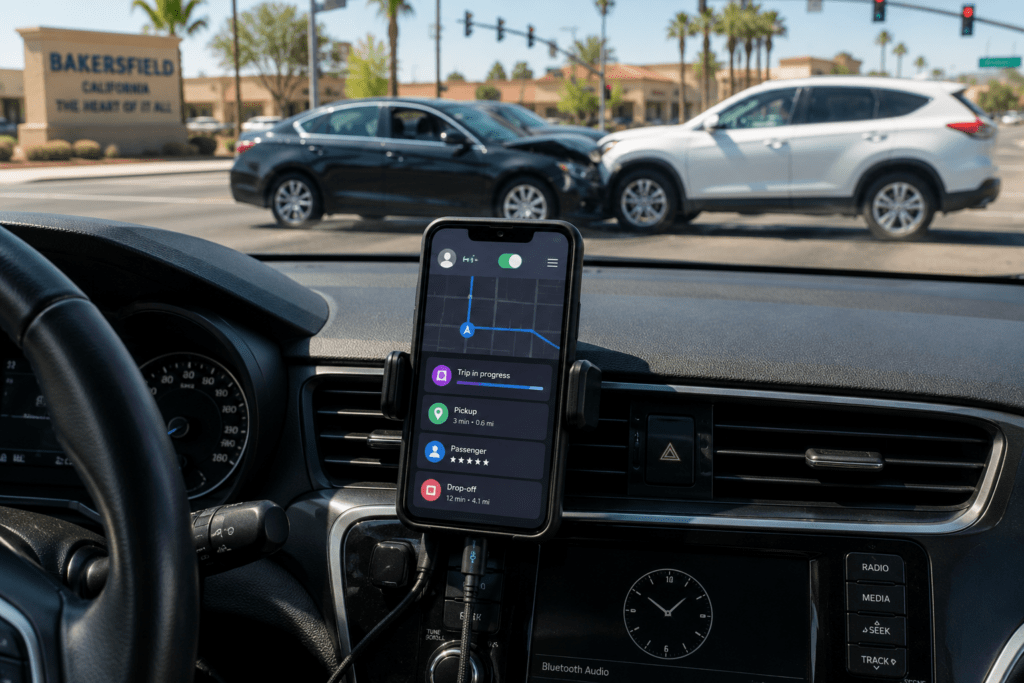
A Bakersfield rideshare driver app status investigation may involve much more than reviewing vehicle damage or reading a police report. Modern rideshare platforms rely on smartphone applications that continuously record driver activity throughout every shift. Depending on the platform, electronic records may document when the driver logged into the app, accepted a ride request, arrived at the pickup location, began transporting a passenger, completed the trip, or logged out for the day. Although these digital records do not determine liability by themselves, they may become valuable evidence when investigators are working to understand the circumstances surrounding a rideshare collision.
At Super Woman Super Lawyer, we understand that rideshare accident investigations often involve multiple sources of electronic evidence in addition to traditional documentation. A Bakersfield rideshare driver app status review may be compared with trip logs, GPS records, dashcam footage, Event Data Recorder (EDR) information, surveillance video, witness statements, police reports, and photographs collected from the scene. Looking at these sources together frequently provides investigators with a more complete understanding of how the collision occurred than relying on any single document alone.
Rideshare vehicles operate throughout Bakersfield every day, transporting passengers between residential neighborhoods, office buildings, shopping centers, hotels, airports, schools, restaurants, and entertainment venues. Drivers regularly travel along California Avenue, Ming Avenue, Rosedale Highway, Stockdale Highway, Truxtun Avenue, Highway 99, Highway 58, and Interstate 5 while completing rides requested through mobile applications. Throughout each trip, rideshare platforms continue generating electronic records documenting driver activity, passenger assignments, and route information.
According to the California Public Utilities Commission (CPUC), companies such as Uber and Lyft operate as Transportation Network Companies (TNCs) subject to California regulations governing rideshare operations. These platforms rely heavily on electronic trip management systems that record driver availability, ride requests, trip status, and other operational information throughout the day.
This article explains how Bakersfield rideshare driver app status may become part of a rideshare accident investigation, what types of trip information rideshare companies commonly maintain, why digital records should be preserved promptly, and how investigators compare app activity with other available evidence.
Why Rideshare Applications Generate Valuable Digital Evidence
Unlike traditional taxi services, rideshare companies manage nearly every aspect of transportation electronically. Drivers receive trip requests through smartphone applications, navigate to pickup locations using integrated GPS systems, communicate with passengers through the platform, and complete rides using digital confirmation rather than paper documentation. As a result, nearly every stage of the trip creates electronic records.
A Bakersfield rideshare driver app status investigation often begins by determining exactly what stage of the trip the driver had reached when the collision occurred. The rideshare application may indicate whether the driver was waiting for a ride request, traveling to pick up a passenger, actively transporting a passenger, completing the ride, or no longer available to receive requests.
Because every rideshare platform manages trips differently, investigators first identify which application was being used before evaluating what electronic information may still be available following the collision.
Driver Availability Status May Establish the Driver’s Work Activity
One of the most valuable aspects of a Bakersfield rideshare driver app status investigation is determining whether the driver was actively logged into the rideshare platform when the collision occurred. Most rideshare applications distinguish between drivers who are offline, available to receive ride requests, traveling to a passenger, or actively transporting a customer.
Investigators may compare driver availability records with trip timestamps, GPS information, surveillance footage, and witness statements to establish the driver’s work activity immediately before the collision. Understanding whether the driver was actively engaged in rideshare operations often provides important context when evaluating the overall sequence of events.
Because these records are generated automatically by the rideshare platform, they may provide objective electronic information that supplements witness testimony and other available evidence.
Trip Requests Automatically Create Electronic Records
Every accepted rideshare request generates a series of electronic records documenting the progression of the trip. Depending on the platform, these records may include the time the ride request was received, when the driver accepted the request, estimated arrival information, passenger pickup time, trip start, route progress, and trip completion.
A Bakersfield rideshare driver app status investigation may include reviewing these electronic trip logs to determine whether the collision occurred before passenger pickup, while the passenger was inside the vehicle, or after the trip had ended. Investigators often compare these records with GPS information, dashcam footage, surveillance video, and witness statements to establish a more accurate timeline.
Although trip logs do not establish fault by themselves, they frequently help investigators understand where the driver was within the rideshare process when the accident occurred.
GPS Navigation Is Often Integrated Into the Rideshare Platform
Most rideshare applications include built-in navigation that guides drivers to passenger pickup locations and destinations. As drivers complete trips, the application continuously updates estimated arrival times, route information, and location history.
A Bakersfield rideshare driver app status investigation may therefore include reviewing route information generated through the rideshare platform together with GPS history, vehicle location records, and trip timestamps. Investigators compare these digital records with surveillance footage, roadway evidence, and witness statements to better understand the driver’s movements before the collision.
Because navigation systems vary between rideshare platforms, investigators evaluate each application’s electronic records individually rather than assuming every platform stores identical information.
For additional guidance on preserving important evidence after a collision, read What to Do After a Car Accident in California: What Actually Matters. Many of the same evidence preservation principles discussed in that guide also apply following rideshare accidents where electronic trip records and mobile application data may become important.
If you were injured in a rideshare accident, our Bakersfield Car Accident Lawyer page explains how rideshare app records, trip logs, GPS history, surveillance footage, and other forms of electronic evidence may become important during the investigation of a personal injury claim.
Why Driver App Records Should Be Preserved Promptly
One of the most important aspects of a Bakersfield rideshare driver app status investigation is recognizing that rideshare applications continue generating new electronic information throughout the driver’s workday. Every new ride request, completed trip, canceled ride, navigation update, or status change creates additional electronic records that may affect the available trip history.
Because every rideshare platform maintains different data retention procedures, investigators often work to identify available app records as early as reasonably possible following a collision. Acting promptly may improve the opportunity to preserve original trip logs, driver status history, GPS activity, route information, and other digital records before routine business operations or platform updates affect the available information.
Every Rideshare Platform Uses Different Technology
Although Uber, Lyft, and other Transportation Network Companies provide similar services, each platform relies on different software, mobile applications, routing systems, and electronic recordkeeping procedures. Some applications preserve more detailed trip histories than others, while certain records may be retained separately from GPS or dispatch information.
A Bakersfield rideshare driver app status investigation often begins by identifying which rideshare platform the driver was using, what version of the application was installed, and how trip information is stored. Understanding these systems early helps investigators determine what electronic records may still exist and what additional sources of digital evidence should be reviewed alongside the rideshare application itself.
How Driver App Status and Trip Logs May Support a Rideshare Accident Investigation
A Bakersfield rideshare driver app status investigation rarely depends on a single electronic record. Modern rideshare platforms continuously generate digital information from the moment a driver opens the application until the end of the workday. Driver availability, trip requests, passenger pickups, GPS routing, estimated arrival times, ride completion, and customer notifications all create electronic records that investigators may review alongside surveillance footage, dashcam recordings, Event Data Recorder (EDR) information, police reports, witness statements, and physical evidence collected from the collision scene.
Unlike traditional transportation services that relied primarily on dispatch records, rideshare companies maintain a nearly continuous digital timeline of each driver’s activity. These electronic records often provide valuable context that supplements witness recollections and helps investigators reconstruct the sequence of events leading up to the collision.
Driver App Status May Help Establish What the Driver Was Doing
One of the most important aspects of a Bakersfield rideshare driver app status investigation is determining what the driver was doing within the rideshare application immediately before the collision occurred. Most platforms distinguish between drivers who are offline, waiting for ride requests, traveling to a pickup location, transporting a passenger, or completing a trip.
These distinctions may become important because each phase of a rideshare trip generates different electronic records. For example, a driver waiting for a ride request may be navigating independently, while a driver transporting a passenger is typically following an active route generated by the rideshare platform.
Investigators may compare driver status history with GPS records, surveillance footage, witness statements, and police reports to establish a more complete timeline of the driver’s activities before the collision.
Trip Logs May Create a Detailed Timeline
Every accepted rideshare trip creates a series of electronic timestamps documenting how the trip progressed. Depending on the platform, investigators reviewing Bakersfield rideshare driver app status may identify when the ride request was received, when it was accepted, when the driver arrived at the pickup location, when the passenger entered the vehicle, when the trip officially began, and when the ride ended.
These timestamps often provide valuable context because they may be compared with surveillance footage, traffic cameras, emergency dispatch records, and witness observations. If the collision occurred while the driver was actively transporting a passenger, the electronic trip history may help establish exactly where the ride was within the overall timeline.
Although trip logs alone cannot determine how the collision occurred, they frequently provide investigators with objective chronological information that supports other available evidence.
GPS Route History May Help Reconstruct the Trip
Most rideshare applications integrate navigation directly into the driver’s smartphone, providing turn-by-turn directions throughout the trip. As the driver travels, the application typically records route information, estimated arrival updates, and changes in vehicle location.
A Bakersfield rideshare driver app status investigation may therefore include reviewing GPS route history together with trip logs, surveillance footage, dashcam recordings, and roadway evidence. Investigators may compare these records to determine whether the driver remained on the suggested route, encountered unexpected traffic conditions, or was approaching a pickup or drop-off location when the collision occurred.
GPS information is generally most valuable when evaluated together with the surrounding evidence rather than independently.
Driver and Passenger Activity May Be Reviewed Together
Modern rideshare platforms generate electronic information for both the driver and the passenger throughout every trip. While investigators focus primarily on records relevant to the collision itself, they may compare driver application activity with passenger trip information, dispatch records, GPS history, and other digital evidence to better understand the timing of events.
A Bakersfield rideshare driver app status investigation may therefore include reviewing how electronic trip information corresponds with witness statements, surveillance footage, and police reports. Looking at multiple independent sources often provides investigators with a more complete picture than relying on one electronic record alone.
Understanding how different forms of digital evidence work together can also be helpful after any motor vehicle collision. Our article How Personal Injury Settlements Really Work in California explains why preserving electronic records, photographs, witness statements, repair documentation, and medical records frequently creates a stronger overall understanding of a personal injury claim.
California Laws That May Become Relevant During a Rideshare Accident Investigation
Although Bakersfield rideshare driver app status may provide valuable electronic information, investigators still evaluate rideshare collisions using the complete body of available evidence. California traffic laws, Transportation Network Company regulations, roadway conditions, witness testimony, and physical evidence all contribute to understanding how the collision occurred.
Transportation Network Companies Operate Under California Regulations
Companies such as Uber and Lyft operate in California as Transportation Network Companies (TNCs) under the oversight of the California Public Utilities Commission (CPUC). The CPUC regulates various aspects of rideshare operations, including driver requirements, insurance obligations, and operational standards.
During a Bakersfield rideshare driver app status investigation, investigators may compare rideshare platform records with other available evidence to determine what stage of the trip the driver had reached when the collision occurred. Driver status information often provides valuable context when evaluated alongside the broader accident investigation.
Drivers Must Continue Operating Their Vehicles Safely
Regardless of whether a rideshare driver is transporting a passenger or waiting for the next ride request, California’s Basic Speed Law (Vehicle Code §22350) requires motorists to drive at a speed that is reasonable and prudent based on traffic, roadway conditions, visibility, and weather.
A Bakersfield rideshare driver app status investigation may compare electronic trip records with roadway evidence, surveillance footage, GPS information, and witness statements to better understand the circumstances surrounding the collision. Digital records provide valuable context but remain only one component of the overall investigation.
Comparative Negligence May Still Apply
California follows a comparative negligence system, meaning investigators evaluate the conduct of everyone involved in the collision rather than automatically assigning responsibility to one driver.
A Bakersfield rideshare driver app status investigation therefore includes much more than reviewing rideshare application records. Investigators may also compare trip logs with dashcam footage, Event Data Recorder information, surveillance video, witness statements, police reports, photographs, and vehicle inspections before determining how the collision occurred.
If you’re recovering from injuries following a rideshare accident, you may also find Should You Accept a Car Accident Settlement Before Finishing Medical Treatment in Newport Beach? helpful for understanding why preserving medical documentation and completing treatment may become important before resolving a personal injury claim.
What You Can Do to Help Preserve Rideshare App Evidence
Because rideshare applications continue generating new electronic records throughout a driver’s shift, preserving available digital evidence promptly may improve the overall investigation. A Bakersfield rideshare driver app status investigation often benefits from documenting electronic records before additional rides, software updates, or routine application activity affect the available information.
Preserve Traditional and Digital Evidence Together
Electronic rideshare records become significantly more valuable when evaluated alongside traditional accident evidence. If it is safe to do so, photograph vehicle damage, roadway conditions, nearby intersections, traffic signals, skid marks, debris, weather conditions, and surrounding businesses that may also have surveillance cameras.
These photographs may later be compared with Bakersfield rideshare driver app status, allowing investigators to evaluate how the rideshare platform’s electronic timeline corresponds with the physical evidence collected from the collision scene.
Document the Rideshare Vehicle Information
If possible, record the rideshare vehicle’s license plate, vehicle description, rideshare trade dress (if displayed), and any identifying information available through the rideshare application. This information may assist investigators in identifying the correct trip records, driver account, and electronic ride history associated with the collision.
Identifying the correct trip early may improve the opportunity to locate Bakersfield rideshare driver app status, trip logs, GPS history, dispatch information, and other digital records before routine platform activity affects the available evidence.
Frequently Asked Questions About Driver App Status and Trip Logs
What is driver app status in a rideshare accident?
Bakersfield rideshare driver app status generally refers to the driver’s activity within a rideshare application at the time of a collision. Depending on the platform, investigators may determine whether the driver was offline, waiting for a ride request, traveling to pick up a passenger, actively transporting a passenger, or completing a trip. Although app status does not determine fault by itself, it may provide important context when reviewed alongside other available evidence.
Can rideshare trip logs help establish what happened before a collision?
In many situations, yes. A Bakersfield rideshare driver app status investigation may include reviewing electronic trip logs documenting ride requests, trip acceptance times, pickup timestamps, GPS route history, passenger drop-offs, and trip completion records. Investigators often compare this information with surveillance footage, witness statements, dashcam recordings, and police reports to develop a more complete timeline.
Do Uber and Lyft keep electronic trip records?
Major Transportation Network Companies (TNCs), including Uber and Lyft, generally maintain electronic records relating to trips completed through their platforms. During a Bakersfield rideshare driver app status investigation, investigators may review available trip history, driver status information, GPS records, and other digital documentation depending on the circumstances of the collision and the information maintained by the rideshare company.
Can app records prove who caused the accident?
No. Although Bakersfield rideshare driver app status may provide valuable digital information regarding the driver’s activities before the collision, investigators generally evaluate those records together with surveillance footage, GPS history, Event Data Recorder (EDR) information, witness statements, roadway evidence, police reports, and vehicle inspections before determining how the collision occurred.
Why should rideshare app records be preserved quickly?
Rideshare applications continue generating new electronic records throughout the driver’s shift. Every accepted ride, completed trip, canceled request, navigation update, and status change creates additional information. Preserving Bakersfield rideshare driver app status promptly may improve the opportunity to review original trip records before routine platform activity affects the available electronic evidence.
A Bakersfield rideshare driver app status investigation may provide valuable digital information that helps investigators better understand what occurred before a rideshare collision. Driver availability records, electronic trip logs, GPS route history, passenger pickup times, ride completion records, and mobile application activity may all contribute to developing a more complete timeline of the driver’s activities before the accident.
While rideshare application records can provide important context, they represent only one component of a comprehensive investigation. Investigators generally compare electronic trip information with surveillance footage, dashcam recordings, Event Data Recorder data, witness statements, police reports, roadway evidence, photographs, and vehicle inspections before developing conclusions regarding how the collision occurred. Looking at these sources together frequently provides a more complete understanding than relying on any single form of digital evidence.
Because rideshare applications continue updating throughout the driver’s workday, preserving available electronic records promptly may improve the opportunity to review original trip information before routine platform activity changes the available data. Whether the collision involves Uber, Lyft, or another Transportation Network Company, identifying available Bakersfield rideshare driver app status records early may become an important part of documenting the circumstances surrounding the accident.
Connect With Super Woman Super Lawyer
If you or someone you love has been injured in a rideshare accident, understanding what electronic evidence may be available can feel overwhelming. At Super Woman Super Lawyer, we help clients understand how rideshare app records, trip logs, GPS history, dashcam footage, surveillance video, witness statements, and other documentation may become important during the investigation of a personal injury claim.
You can also learn more about our services by visiting our Bakersfield Car Accident Lawyer page.
Connect with Super Woman Super Lawyer today.
Online Form: Request a case review
Call Now: 800.800.6916
Live Chat: Speak with a legal professional instantly
 Maryam Parman