Bakersfield delivery van accident GPS records often become one of the most valuable sources of information after a collision involving an Amazon delivery van, UPS truck, FedEx vehicle, USPS mail vehicle, grocery delivery van, or another commercial delivery service. Unlike many ordinary passenger vehicle accidents, delivery vehicles typically operate on scheduled routes while using GPS navigation, delivery applications, dispatch software, and electronic tracking systems throughout the workday. These digital systems frequently generate detailed records showing where the vehicle traveled, when deliveries occurred, and how the route changed over time. Understanding what information may be available can help accident victims better understand why these records sometimes become important after a crash.
Many people assume the police report and photographs from the accident scene provide all the information needed to understand what happened. While those records remain important, commercial delivery vehicles often generate additional digital evidence that does not exist in most passenger vehicle collisions. GPS route history, delivery timestamps, dispatch instructions, navigation records, and electronic trip data may all help explain the movements of the vehicle before the collision occurred. This is one reason Bakersfield delivery van accident GPS records are frequently reviewed alongside traditional accident evidence.
Understanding Bakersfield delivery van accident GPS records also helps explain why delivery vehicle investigations sometimes involve more documentation than a typical car accident. Digital route information, dispatch communications, delivery schedules, photographs, witness statements, police reports, and medical records often work together to create a much more complete picture of the collision. Preserving available documentation early frequently helps ensure important records remain available while the investigation continues.
Why GPS Records Can Become Important After a Delivery Van Accident
Route history may help establish where the vehicle traveled
Modern delivery vehicles rely heavily on GPS navigation systems and electronic route planning throughout the workday. Drivers often receive optimized delivery routes that automatically update as packages are delivered, traffic conditions change, or new assignments are added. These navigation systems continuously record location information while helping drivers complete deliveries efficiently.
For a Bakersfield delivery van accident GPS records investigation, route history frequently helps establish where the delivery vehicle traveled before the collision occurred. GPS data may identify the streets driven, the sequence of deliveries completed, and the approximate times different locations were reached. When combined with police reports, photographs, and witness statements, these digital records often provide valuable context regarding the events leading up to the crash.
Investigators sometimes compare GPS history with other available evidence to better understand the timeline surrounding the accident. Navigation records may confirm when the vehicle entered a particular neighborhood, stopped for deliveries, or changed direction immediately before the collision. Rather than relying solely on memory, Bakersfield delivery van accident GPS records often provide objective information regarding the movement of the delivery vehicle throughout the day.
Delivery timestamps can help build an accurate timeline
In addition to GPS navigation, many delivery companies use electronic systems that automatically record when deliveries are attempted or completed. Package scans, customer confirmations, proof-of-delivery photographs, and dispatch updates often generate precise timestamps throughout the driver’s route. These electronic records may later become useful because they help establish exactly when different portions of the workday occurred.
For a Bakersfield delivery van accident GPS records review, delivery timestamps frequently complement GPS route history by showing when the driver stopped, how long deliveries took, and when the vehicle resumed travel. These records often help investigators compare delivery activity with the estimated time of the collision. When several independent sources contain similar timestamps, they frequently contribute to a more accurate reconstruction of the day’s events.
Because delivery operations rely heavily on electronic tracking, timestamps are generally created automatically rather than manually entered by the driver. This often provides investigators with additional objective information regarding the sequence of deliveries before the collision. Preserving Bakersfield delivery van accident GPS records together with delivery documentation frequently helps create a much stronger timeline than relying solely on witness recollections.
Navigation changes and unexpected route deviations
Although delivery routes are often carefully planned, they do not always remain unchanged throughout the day. Road construction, traffic congestion, weather conditions, customer requests, or dispatch updates may require drivers to alter their planned route. GPS systems typically record these changes automatically, providing investigators with additional information regarding why the vehicle was traveling on a particular roadway when the collision occurred.
For a Bakersfield delivery van accident GPS records investigation, route deviations sometimes help explain circumstances that might otherwise appear unusual. A driver may have been redirected around construction, instructed to complete an additional delivery, or rerouted because of changing traffic conditions. These adjustments often become part of the electronic route history maintained by the delivery company’s navigation system.
Understanding these changes frequently helps investigators place the collision within the broader context of the driver’s workday. Rather than assuming the vehicle followed one continuous route, GPS records often demonstrate how delivery operations changed throughout the shift. This additional information may become valuable when reviewed alongside dispatch records, delivery logs, and other Bakersfield delivery van accident GPS records.
Other Delivery Records That May Become Important
Dispatch instructions, delivery schedules, and stop logs
Delivery companies generate far more documentation than most passenger vehicle operators during an ordinary workday. Dispatch systems routinely assign routes, schedule deliveries, update customer requests, and communicate with drivers throughout the shift. These records frequently provide valuable information regarding how the driver’s day was organized before the collision occurred.
For a Bakersfield delivery van accident GPS records review, dispatch instructions often help establish when the driver received assignments, where deliveries were scheduled, and whether changes occurred before the accident. Delivery schedules may identify expected arrival windows, while stop logs frequently document each completed delivery throughout the route. Together, these records often complement GPS history by explaining not only where the vehicle traveled but also why it was traveling there.
When reviewed alongside police reports, photographs, witness statements, and medical records, Bakersfield delivery van accident GPS records combined with dispatch documentation frequently provide investigators with a much more complete understanding of the delivery operation before the collision occurred. These commercial records often become an important part of understanding the broader circumstances surrounding the accident.
Other Delivery Records That May Become Important
Onboard cameras, telematics, and vehicle monitoring systems
Many modern delivery fleets use onboard technology that records much more than simple GPS directions. Depending on the company and vehicle, delivery vans may be equipped with forward-facing cameras, driver-facing cameras, telematics systems, speed monitoring, braking sensors, acceleration tracking, and other electronic monitoring devices. These systems are designed to improve fleet safety, manage vehicle performance, and document delivery operations throughout the workday.
For a Bakersfield delivery van accident GPS records investigation, telematics data often complements route history by documenting how the vehicle was being operated before the collision. Sudden braking events, rapid acceleration, steering inputs, vehicle speed, and route progression may all become part of the electronic record. While every delivery company uses different technology, these systems frequently generate valuable information that helps investigators better understand the circumstances surrounding the crash.
Onboard cameras may also provide additional context if they captured traffic conditions, roadway hazards, weather, or vehicle movement before the collision. When combined with Bakersfield delivery van accident GPS records, dispatch information, police reports, and witness statements, telematics data often helps create a much more complete picture of the driver’s activities throughout the delivery route.
Driver communications and dispatch updates
Throughout the workday, delivery drivers frequently communicate with dispatchers regarding route changes, delivery questions, customer requests, traffic delays, or operational issues. These communications often occur through company-issued mobile devices, delivery applications, dispatch software, or approved communication systems rather than traditional phone calls alone.
For a Bakersfield delivery van accident GPS records review, dispatch communications sometimes provide valuable context regarding the driver’s schedule before the collision occurred. Messages may explain why a route changed, why a delivery was delayed, or why the driver traveled through a particular neighborhood. These communications frequently help investigators understand the broader delivery operation rather than focusing only on the collision itself.
Because dispatch updates often include timestamps, they may also help establish an accurate timeline when compared with GPS history, delivery records, surveillance footage, and police documentation. Preserving Bakersfield delivery van accident GPS records together with dispatch communications often creates a stronger overall understanding of how the delivery route progressed before the accident.
Additional Documentation That May Help Explain the Collision
Vehicle inspections, maintenance records, and repair history
Commercial delivery vehicles typically operate for many hours each day, making routine inspections and maintenance an important part of fleet operations. Delivery companies often maintain service records documenting scheduled maintenance, tire replacement, brake inspections, fluid changes, lighting repairs, and other mechanical work performed throughout the vehicle’s service life.
For a Bakersfield delivery van accident GPS records investigation, maintenance documentation sometimes provides additional context regarding the condition of the delivery vehicle before the collision. Inspection reports, repair invoices, and service histories frequently establish when the vehicle was last serviced and what maintenance was performed. These records often complement GPS information by helping investigators understand both how the vehicle was operated and how it was maintained.
Vehicle inspection reports may also document pre-trip observations completed before the delivery route began. When reviewed together with Bakersfield delivery van accident GPS records, dispatch records, and police reports, these maintenance documents frequently contribute to a more complete understanding of the commercial operation.
Crash-scene photographs and witness observations
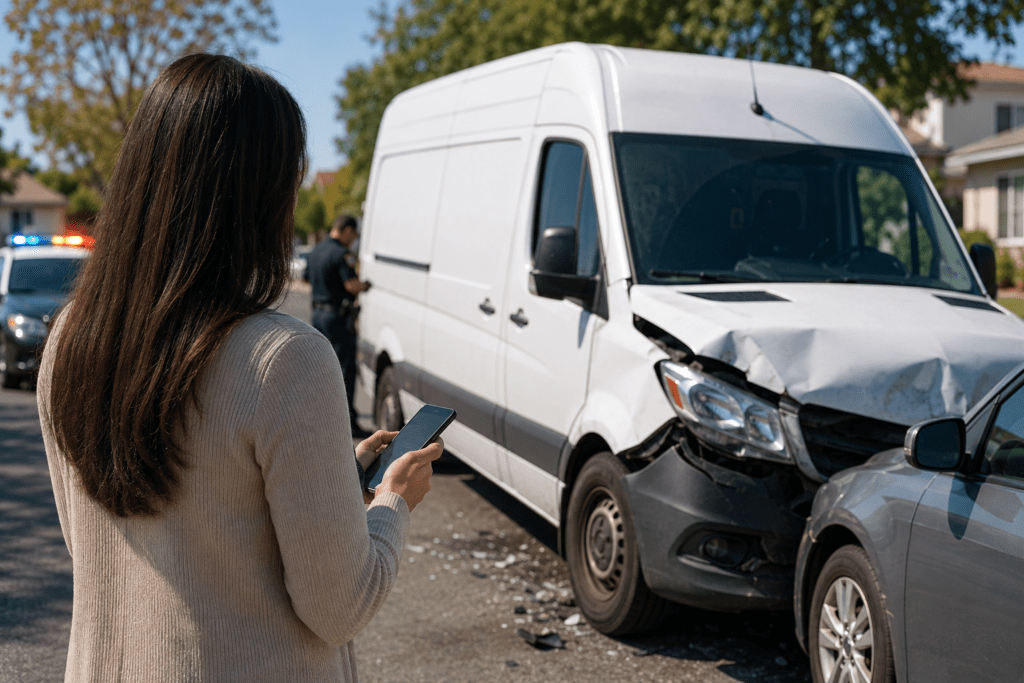
Although commercial delivery records provide valuable digital information, traditional accident evidence remains equally important. Photographs taken immediately after the collision often preserve vehicle positions, roadway conditions, traffic controls, weather, debris, and visible damage before conditions change. Witnesses may also provide observations regarding vehicle movement, traffic flow, or other circumstances that occurred immediately before the crash.
For a Bakersfield delivery van accident GPS records review, photographs frequently help place electronic records into physical context. GPS history may show where the delivery van traveled, while photographs demonstrate what the roadway looked like when the collision occurred. Witness statements often complement these records by describing traffic conditions or driver behavior that may not appear in digital documentation alone.
Together, crash-scene photographs, witness observations, police reports, and Bakersfield delivery van accident GPS records often provide investigators with multiple perspectives on the same event. Rather than relying on a single source of information, reviewing these records collectively frequently results in a much clearer understanding of the accident.
Medical records documenting injuries after the collision
Medical documentation remains one of the most important parts of any injury claim, regardless of the type of vehicle involved. Emergency room records, urgent care evaluations, physician notes, diagnostic imaging, physical therapy records, specialist consultations, and follow-up treatment frequently establish how injuries developed following the collision and how recovery progressed over time.
For someone involved in a Bakersfield delivery van accident GPS records investigation, medical records often complement the commercial delivery documentation by explaining how the collision affected the injured person physically. While GPS records and dispatch documentation help explain the delivery route, medical records document the injuries, treatment, and ongoing recovery that followed the accident.
Maintaining organized medical records together with Bakersfield delivery van accident GPS records, photographs, police reports, and insurance correspondence often creates a much stronger overall file. Each category of documentation contributes different information while helping investigators understand both how the collision occurred and how it affected the people involved.
Insurance Questions After a Delivery Van Accident
Multiple insurance policies and commercial investigations
Delivery van accidents sometimes involve insurance reviews that differ from ordinary passenger vehicle collisions. Depending on the company operating the vehicle, investigators may review commercial automobile insurance, employer records, dispatch documentation, GPS data, and other business records before completing the claim evaluation. Because delivery vehicles often operate as part of larger commercial fleets, multiple records are frequently gathered while investigators work to understand how the collision occurred.
For a Bakersfield delivery van accident GPS records investigation, GPS history often becomes one component of a much larger evidence file. Dispatch instructions, delivery schedules, telematics data, vehicle maintenance records, driver communications, and insurance documentation frequently help explain how the delivery route was organized before the collision. Rather than reviewing each record independently, investigators generally compare them together to create a more complete timeline of the driver’s activities.
Maintaining organized documentation often makes this process much easier. Police reports, medical records, repair estimates, photographs, witness statements, and Bakersfield delivery van accident GPS records frequently complement one another by providing different perspectives on the same event. The stronger the documentation becomes, the easier it often is to understand both the collision itself and the commercial operation surrounding the delivery route.
Why preserving evidence early often matters
Digital records generated during a delivery route may not remain available indefinitely. GPS information, dispatch communications, onboard technology, and company records are often maintained through electronic systems that continue updating after the collision. While businesses typically preserve operational records as part of their normal activities, identifying relevant documentation early frequently helps ensure the available information is organized and reviewed alongside other evidence.
For a Bakersfield delivery van accident GPS records review, preserving photographs, witness information, repair estimates, medical documentation, and insurance correspondence often helps create a complete record while additional commercial records are being reviewed. Delivery routes continue, vehicles return to service, and business operations move forward quickly following an accident. Organizing available documentation early often provides the clearest picture of what occurred.
This same principle applies to digital evidence as well. GPS history, dispatch logs, telematics information, and onboard technology frequently provide valuable context regarding the movement of the delivery vehicle before the collision. When combined with traditional accident evidence, Bakersfield delivery van accident GPS records often contribute to a much stronger overall understanding of the crash.
Settlement discussions before all delivery records are available
Commercial vehicle investigations often continue developing well after the accident scene has been cleared. Additional documentation may become available as investigators review GPS history, dispatch communications, maintenance records, telematics data, repair documentation, and medical treatment records. Because these materials are frequently gathered over time, the overall evidence file may continue growing during the weeks following the collision.
For individuals involved in a Bakersfield delivery van accident GPS records investigation, understanding that documentation continues developing often helps explain why preserving records remains important throughout recovery. Medical treatment may continue, additional repair estimates may be completed, and commercial delivery records may provide further context regarding the vehicle’s operation before the collision.
We discuss similar documentation principles in How Personal Injury Settlements Really Work in California and Should You Accept a Car Accident Settlement Before Finishing Medical Treatment in Newport Beach?
Both articles explain why allowing documentation to develop often creates a clearer understanding of an injury claim before important decisions are made.
Contact Super Woman Super Lawyer for a Free Consultation — No Fee Unless We Win, Available 24/7
Why commercial delivery records often strengthen the investigation
Delivery vehicle collisions frequently involve both traditional accident evidence and commercial business records. Photographs, witness statements, police reports, medical documentation, repair estimates, and Bakersfield delivery van accident GPS records often work together to explain how the collision occurred and how it affected the injured parties. GPS history, dispatch instructions, delivery schedules, and telematics information frequently provide valuable context that does not exist in ordinary passenger vehicle accidents.
Maintaining organized documentation often makes it much easier to understand how these different records fit together. Preserving Bakersfield delivery van accident GPS records alongside medical records, crash-scene photographs, insurance communications, and repair documentation frequently creates the strongest overall accident file while the investigation continues.
If you have questions regarding Bakersfield delivery van accident GPS records, speaking with a Bakersfield Car Accident Lawyer can help provide additional clarity regarding commercial vehicle documentation, GPS records, and the evidence that may become important following a delivery van collision.
The Federal Motor Carrier Safety Administration (FMCSA) provides information regarding commercial motor vehicle safety, fleet operations, and transportation regulations:
Connect With Super Woman Super Lawyer
A Bakersfield delivery van accident GPS records investigation often involves much more than reviewing the accident scene. GPS route history, delivery schedules, dispatch instructions, telematics data, maintenance records, photographs, medical documentation, and witness statements frequently work together to explain both how the delivery operation was conducted and how the collision occurred.
The sooner Bakersfield delivery van accident GPS records and other supporting documentation are preserved, the easier it often becomes to understand the sequence of events leading to the collision. Whether the delivery vehicle belonged to a national carrier or a local delivery company, maintaining organized records frequently provides the clearest overall picture of the accident and the recovery process.
Online Form: Request a case review
Call Now: 800.800.6916
Live Chat: Speak with a legal professional instantly
 Maryam Parman