A Reno motorcycle accident can happen in an instant when a driver begins reversing from a parking space, driveway, loading area, or another location while a motorcyclist is approaching. Unlike a conventional rear-end or intersection collision, a reversing crash can require investigators to determine where the vehicle began its maneuver, where the motorcycle was positioned at that moment, what each person could see, and how much distance existed before their paths crossed. Reverse lights, mirrors, backup cameras, sensors, parked vehicles, buildings, landscaping, video, physical damage, and witness observations may all become important.
Nevada law specifically addresses backing. Under Nevada Revised Statutes § 484B.113, a driver must not back a vehicle unless the movement can be made with reasonable safety and without interfering with other traffic. Nevada law also restricts backing in certain locations. Those rules provide important context, but whether a driver violated the law or caused a particular Reno motorcycle accident depends on the actual evidence.
A reversing collision can also generate a dispute about rider speed. The driver may claim that the motorcycle appeared suddenly or was moving too quickly to avoid. The rider may report that the vehicle entered the travel path without enough warning. Rather than treating either account as conclusive, a Reno motorcycle accident investigation can compare those statements with video, physical evidence, vehicle and motorcycle damage, sightlines, witness observations, and available electronic information.
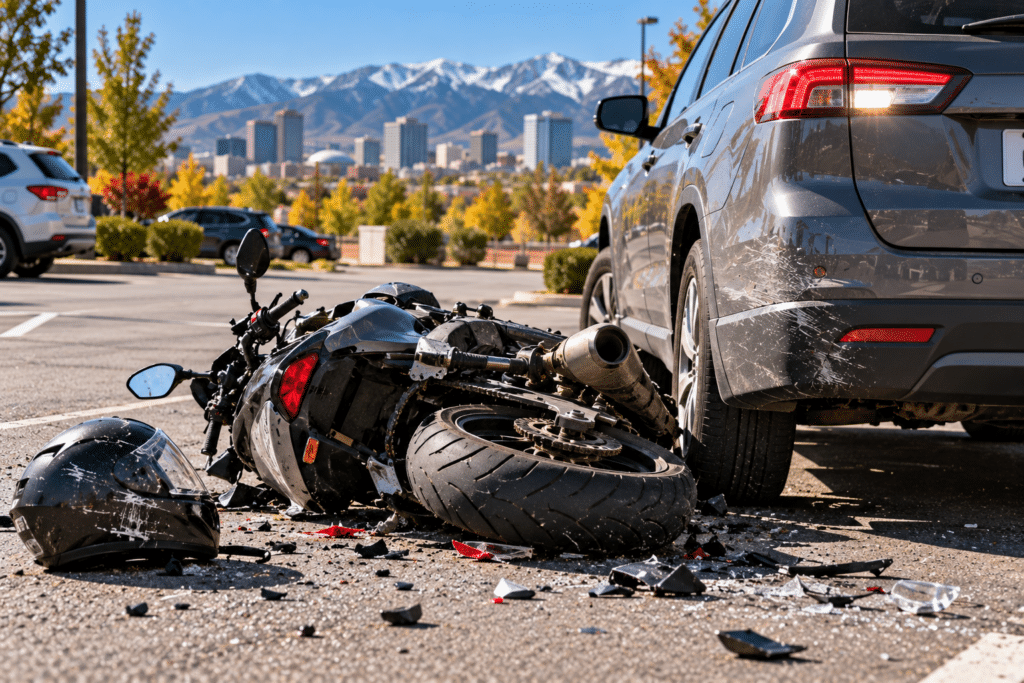
Motorcycles can also leave a different physical evidence pattern from passenger vehicles. The motorcycle may fall and slide after contact, protective equipment may be damaged, and the final resting position may be separated from the initial point of impact. Preserving the motorcycle, helmet, clothing, photographs, debris, and scene evidence before repairs or disposal may therefore become important.
If you or someone you love was injured while riding, our Reno Motorcycle Accident Lawyer page provides additional information about how Super Woman Super Lawyer can evaluate crash evidence, medical documentation, insurance issues, and financial losses.
Connect with Super Woman Super Lawyer today through our Online Form, call 800.800.6916, or start a Live Chat. Following a Reno motorcycle accident involving a reversing vehicle, early documentation may help establish the paths of both vehicles before the scene, motorcycle, or digital evidence changes.
Reconstructing the Reversing Maneuver After a Reno Motorcycle Accident
The fact that a vehicle was moving backward does not, by itself, reconstruct the collision. A Reno motorcycle accident investigation may need to establish where the reversing maneuver started, how far the vehicle traveled, whether the driver stopped during the maneuver, and when the motorcycle entered the area where their paths crossed.
Photographs, surveillance footage, measurements, vehicle damage, motorcycle damage, witness statements, and final resting positions may help answer those questions. The physical environment can also affect what each person was able to see.
Whether the Vehicle Was Leaving a Parking Space, Driveway, or Loading Area
The location of the reversing maneuver can significantly affect the investigation. A driver backing from a perpendicular parking space may have limited lateral visibility because of vehicles parked on both sides. Someone reversing from a residential driveway may need to cross a sidewalk before entering the roadway. A driver leaving a commercial loading area may encounter trucks, buildings, equipment, or other obstructions.
For a Reno motorcycle accident, photographs should document the entire maneuvering area rather than only the impact location. Include the parking space or driveway, adjacent vehicles, travel lane, curb, signs, walls, landscaping, and other features affecting visibility.
Nevada’s backing statute requires drivers to make a backing movement with reasonable safety and without interfering with other traffic. The particular environment may therefore become relevant to evaluating what precautions were available to the driver.
If the collision occurred at a business, apartment complex, hotel, casino, parking facility, or other property with cameras, identify those systems promptly. Video may show the vehicle before it began reversing and establish whether the driver paused, how quickly it moved, and where the motorcycle was located.
Rider Position and Direction of Travel
A Reno motorcycle accident investigation should also establish where the rider was traveling before the vehicle reversed. The motorcycle may have been moving through a parking aisle, along a roadway, past a driveway, through a loading area, or in another lawful travel path.
Photographs and video can help document lane position and direction. Helmet-camera footage may show the rider’s perspective, while surveillance or another driver’s dashcam may provide a wider view.
The rider’s position can matter when evaluating visibility. A motorcycle approaching directly behind a vehicle may be visible differently from one approaching from an angle. Parked cars, trucks, walls, landscaping, or other objects may further affect sightlines.
Investigators should avoid assuming that either the motorcycle’s smaller size or the vehicle’s reversing movement automatically answers the fault question. The relevant issue is what the evidence shows about the movements and conduct of both parties.
Distance Between the Vehicle and Motorcycle Before the Maneuver
Distance can become central when the driver claims there was no motorcycle nearby before reversing. A Reno motorcycle accident reconstruction may therefore examine how far apart the vehicles were when the maneuver began and how much time each person had to perceive and react.
Video can be particularly useful because fixed objects in the scene may provide reference points. Parking-space markings, curbs, buildings, light poles, signs, and other features can help qualified professionals evaluate movement over time.
Physical evidence may add context. Impact location, motorcycle damage, vehicle damage, tire marks, scrape marks, and final resting positions can be compared with the scene geometry.
Driver and rider recollections remain relevant, but estimates made after a stressful collision should be evaluated alongside objective evidence whenever available.
Visibility and Warning Evidence in a Reno Motorcycle Accident
Visibility is often one of the most disputed issues in a reversing collision. A driver may say the motorcycle was in a blind spot. The rider may say the vehicle gave little warning before entering the path. A Reno motorcycle accident investigation can examine the vehicle’s equipment and the surrounding environment to determine what evidence supports those accounts.
Modern vehicles may have reverse lights, cameras, parking sensors, cross-traffic alerts, mirrors, or other systems. Older vehicles may have fewer features. Their presence should be documented rather than assumed.
Reverse Lights, Backup Cameras, Sensors, and Mirrors
Reverse lights can provide a visual warning that a vehicle is in reverse, but the investigation may need to determine whether they were functioning and when they became visible to the rider.
A backup camera may show the area directly behind the vehicle, while sensors or cross-traffic systems may provide other alerts depending on the vehicle. The existence and operation of these systems vary substantially by make, model, year, trim, and settings.
After a Reno motorcycle accident, photograph the vehicle and identify its make, model, year when available, and visible safety equipment. If a backup camera or sensor issue becomes disputed, appropriately qualified inspection may be needed.
Mirrors can also matter. Photographs from approximately the driver’s seated position may help document what could be seen through the rearview and side mirrors. A photograph taken while standing outside the vehicle may not accurately represent the driver’s actual view.
The investigation should not assume that a vehicle equipped with a camera necessarily recorded the collision. Many backup cameras display live images without storing them.
Parked Vehicles, Buildings, Landscaping, and Other Obstructions
A driver’s ability to see a motorcycle can depend heavily on surrounding objects. A large pickup, SUV, delivery van, wall, fence, hedge, column, dumpster, or other obstruction may limit lateral visibility.
A Reno motorcycle accident scene should therefore be photographed before temporary conditions change. Parked vehicles can leave within minutes. Delivery trucks move. Landscaping is trimmed. Construction barriers may be removed.
The rider’s view matters too. A parked vehicle could prevent the motorcyclist from seeing the reversing car until part of it enters the travel path.
Wider photographs can show the relationship between the obstruction, reversing vehicle, motorcycle path, and impact point. That context may be more informative than a close-up of one object.
Driver and Rider Statements About When They First Saw Each Other
The point at which each person first perceived the other can become important. The driver may report checking mirrors before reversing and seeing no motorcycle. The rider may report noticing the reverse lights but having insufficient distance to stop.
Those statements should be preserved accurately rather than converted into conclusions about fault. A Reno motorcycle accident investigation may then compare them with video, sightlines, physical evidence, and witness accounts.
If the driver says the motorcycle appeared suddenly because of excessive speed, that assertion should likewise be evaluated rather than accepted as a precise measurement. Nevada’s general speed rule prohibits operating at a speed greater than is reasonable or proper under the conditions and prohibits exceeding posted limits, but whether a rider violated those rules depends on evidence of actual operation.
Statements made immediately after the collision may also appear in police reports, witness recordings, insurance communications, or video. Preserve those records before memories become less precise.
Digital and Physical Evidence to Preserve
A Reno motorcycle accident can produce evidence from several independent sources. Helmet cameras may show the rider’s perspective. Dashcams may capture the vehicle movement. Surveillance may show both parties. Physical damage can help identify contact locations.
No single piece of evidence should automatically be treated as the entire reconstruction. The strongest investigation often compares several sources.
Helmet Cameras, Dashcams, and Nearby Surveillance
Helmet-camera footage can be particularly useful in a Reno motorcycle accident because it may capture the rider’s direction of travel, vehicle movement, reverse lights, traffic conditions, and the time available to react.
Preserve the original recording when possible. A compressed social-media upload or text-message copy may lose image quality or metadata.
Other motorists may also have dashcams. Nearby businesses, residences, parking facilities, apartment complexes, or commercial properties may maintain surveillance systems. Identify visible cameras and property addresses promptly.
Video retention periods vary. Some systems overwrite footage automatically, making evidence preservation more urgent than the legal filing deadline.
Motorcycle and Vehicle Damage Locations
Photograph the motorcycle from multiple angles before repair. Document the wheels, forks, handlebars, fuel tank or battery area where applicable, frame, engine components, exhaust, foot controls, lights, and other damaged areas.
Vehicle damage should also be documented. A Reno motorcycle accident involving a reversing vehicle may produce damage to a bumper, corner, rear quarter, door, or another area depending on the maneuver.
Contact locations can help qualified investigators evaluate how the vehicles came together. The meaning of the damage should not be guessed solely from photographs when technical reconstruction is necessary.
Preserve repair estimates, total-loss information, towing documentation, and inspection records as well.
Tire Marks, Debris, and Final Resting Positions
Roadway and parking-area evidence may include tire marks, scrapes, gouges, broken plastic, glass, motorcycle components, clothing, or other debris.
A Reno motorcycle accident may also cause the motorcycle and rider to travel beyond the initial point of contact. Final resting positions can therefore provide information different from the impact point.
Photograph debris before it is swept away when it is safe to do so. Wider photographs should show where the evidence sits relative to lane markings, parking spaces, curbs, driveways, and vehicles.
If police respond, preserve the incident or report number so available diagrams, photographs, statements, and other records can later be requested.
Injury and Insurance Documentation After a Reno Motorcycle Accident
Physical crash evidence explains how the vehicles interacted. Medical documentation separately establishes what injuries healthcare professionals diagnosed and treated.
Motorcycle collisions can involve substantial forces and limited physical protection, but injury severity should never be assumed from the type of vehicle alone. Each person’s medical condition must be evaluated individually.
Emergency Treatment, Specialist Care, and Rehabilitation
Medical records may begin with ambulance care or an emergency department evaluation. Depending on the injuries, later treatment may involve imaging, surgery, orthopedics, neurology, physical therapy, occupational therapy, pain management, or other services.
A Reno motorcycle accident file should preserve the medical chronology: when symptoms were first reported, what providers diagnosed, what treatment occurred, and what restrictions were recommended.
Medical bills should also be retained, although billing records serve a different purpose from clinical treatment records.
If the injuries affect work, preserve provider restrictions, schedules, time records, employer communications, and wage information. Functional changes at home can also be documented accurately through appropriate records.
Motorcycle, Helmet, and Protective Gear Damage
The motorcycle is not the only property that may contain useful evidence. A helmet, jacket, gloves, boots, pants, armor, communications equipment, camera, phone, or other gear may be damaged.
After a Reno motorcycle accident, photograph protective equipment before disposal. Scrapes or impact damage may provide context about the collision and may also represent property loss.
Nevada’s motorcycle laws include protective-equipment requirements. Nevada law requires qualifying motorcycle riders and passengers on highways to wear approved protective headgear, subject to statutory exceptions, and contains requirements concerning eye protection unless the motorcycle has an approved windscreen.
Helmet use and collision causation should still be treated as separate issues. Whether protective equipment was worn does not, by itself, determine why a driver reversed into a motorcycle’s path.
Recorded Statements and Insurer Allegations About Rider Speed
Insurance adjusters may ask for a recorded statement soon after a Reno motorcycle accident. The injured rider may also hear allegations that speed, lane position, visibility, or another aspect of rider conduct contributed to the collision.
Keep a communication log identifying the insurer, adjuster, claim number, date, and subject. Preserve written allegations, settlement offers, recorded-statement requests, and other substantive correspondence.
Speed allegations should be separated from speed evidence. A driver’s estimate is an observation. Video may provide additional information. Physical reconstruction may provide another source. Available motorcycle or vehicle electronics may sometimes provide relevant data depending on the equipment.
Nevada uses modified comparative negligence in covered negligence actions. Nevada’s statutory framework generally permits recovery when a plaintiff’s negligence is not greater than the negligence of the party or combined parties against whom recovery is sought, with damages adjusted for the plaintiff’s share of negligence.
That makes accurate evidence particularly important when an insurer argues that the rider’s conduct contributed to the Reno motorcycle accident.
Legal Deadline Versus Evidence Preservation
Nevada generally provides a two-year limitations period for personal injury actions under NRS 11.190, subject to exceptions and circumstances that can affect a particular case. Nevada legislative materials describe the two-year personal-injury limitations period contained in that statute.
The practical evidence window after a Reno motorcycle accident can be much shorter. Surveillance may be overwritten, the motorcycle repaired, protective gear discarded, vehicle damage fixed, and witnesses become harder to locate.
Evidence preservation should therefore not be postponed simply because the general lawsuit deadline is longer. The two timelines serve different purposes.
Special circumstances can also affect legal deadlines, so a general article cannot determine the exact filing period for an individual claim.
Serving Injured Motorcycle Riders Throughout Reno
Reno riders travel through a mix of urban streets, commercial parking areas, residential neighborhoods, hotel and casino properties, industrial areas, and major routes including Interstate 80, U.S. 395, South Virginia Street, Kietzke Lane, McCarran Boulevard, and Plumb Lane.
A Reno motorcycle accident involving a reversing vehicle may occur away from a high-speed highway. Parking lots, apartment complexes, shopping centers, loading areas, gas stations, driveways, and commercial properties can all create situations where vehicles back across a rider’s path.
The lower-speed environment does not eliminate the need for evidence. A parking-area collision may actually create more potential video sources because businesses and properties frequently use surveillance cameras.
Nevada’s current traffic laws expressly require a backing movement to be made with reasonable safety and without interfering with other traffic. The specific evidence must still show how that rule relates to the individual collision.
Super Woman Super Lawyer can evaluate the vehicle paths, visibility, warning systems, digital evidence, motorcycle damage, medical records, and insurance communications together. For more information about local representation, visit our Reno Motorcycle Accident Lawyer page.
Frequently Asked Questions About a Reno Motorcycle Accident Involving a Reversing Vehicle
What does Nevada law say about backing a vehicle?
Nevada Revised Statutes § 484B.113 states that a driver must not back unless the movement can be made with reasonable safety and without interfering with other traffic. It also restricts backing in specified locations.
What should I photograph after a reversing motorcycle crash?
Photograph the motorcycle, reversing vehicle, parking space or driveway, surrounding travel path, damage, debris, tire marks, parked vehicles, buildings, landscaping, mirrors, cameras, signs, and final resting positions when it is safe.
Can a backup camera prove what the driver saw?
Not automatically. Backup-camera design and coverage vary by vehicle, and many cameras do not record footage. A Reno motorcycle accident investigation may need to identify the actual vehicle system and evaluate its capabilities.
Can parking sensors or cross-traffic alerts matter?
Potentially. If the vehicle has those systems, their existence and operation may become relevant to the investigation. Their presence should not be assumed solely from the age or appearance of the vehicle.
What if a parked SUV blocked the driver’s view?
Document it promptly. Parked vehicles can move soon after a collision. Photographs and surveillance may help show whether an obstruction affected the driver’s or rider’s sightline.
Can helmet-camera footage help?
Yes. Helmet-camera footage may show the rider’s travel path, the reversing vehicle, warning lights, surrounding traffic, and the time available to react. Preserve the original file when possible.
What if the driver says I was speeding?
A driver’s statement is evidence of that person’s perception, not necessarily a precise measurement. A Reno motorcycle accident speed dispute may also involve video, witnesses, physical evidence, roadway conditions, or other available information.
Should I preserve my motorcycle before repairs?
When reasonably possible, document it thoroughly before repair or disposal. The motorcycle’s damage can be relevant to collision reconstruction as well as property loss.
Should I keep my damaged helmet and riding gear?
Yes, when appropriate. Photograph and preserve damaged protective equipment before disposal because it may contain collision evidence and document property loss.
Does Nevada require motorcycle helmets?
Nevada law includes protective-headgear requirements for motorcycle riders and passengers on highways, subject to statutory exceptions.
Does not wearing protective gear prove the rider caused the collision?
No. Protective-equipment issues and the cause of the vehicle collision are separate questions. A Reno motorcycle accident investigation should determine why the crash occurred from the evidence.
Can surveillance from a business or apartment complex help?
Potentially. Cameras may capture the reversing maneuver and the motorcycle’s approach. Identify potential video sources quickly because recordings may be overwritten.
How does Nevada comparative negligence affect a motorcycle claim?
Nevada’s comparative-negligence framework can reduce recovery based on a plaintiff’s assigned percentage of negligence and can bar recovery when the plaintiff’s negligence exceeds the applicable statutory threshold. The actual effect depends on the parties and evidence in the case.
How quickly should evidence be preserved?
As early as reasonably possible. Video, temporary visibility obstructions, motorcycle damage, vehicle damage, and witness information may change or disappear much sooner than Nevada’s general legal filing deadline.
Call or Contact Super Woman Super Lawyer 24/7 for a Free Consultation and Pay Nothing Unless You Win
A reversing vehicle can enter a rider’s path with little warning, especially in a parking lot, driveway, or loading area where buildings, parked vehicles, landscaping, and other objects affect visibility. A Reno motorcycle accident involving a backing driver may therefore require careful reconstruction of both vehicles’ paths and what each person could see before contact.
Super Woman Super Lawyer can help evaluate the complete Reno motorcycle accident record, including photographs, surveillance, helmet-camera and dashcam footage, reverse lights and safety systems, motorcycle and vehicle damage, roadway evidence, witness information, medical treatment, protective gear, employment losses, and insurance communications.
Super Woman Super Lawyer has recovered more than over $2 billion for clients. Past results do not guarantee a particular outcome, and every motorcycle accident claim depends on its individual facts, evidence, injuries, insurance coverage, and applicable Nevada law.
For additional information about representation after a motorcycle collision, visit our Reno Motorcycle Accident Lawyer page.Connect with Super Woman Super Lawyer today:
Online Form: Request a case review
Call Now: 800.800.6916
Live Chat: Speak with a legal professional instantly
 Maryam Parman