An Oakland vehicle Bluetooth accident records investigation may involve much more than reviewing photographs or reading a police report. Most modern vehicles automatically connect to smartphones through Bluetooth technology every time a driver enters the vehicle. Depending on the manufacturer and infotainment system, the vehicle may record paired devices, connection history, recent synchronization activity, hands-free calling sessions, media streaming, and other wireless interactions throughout the trip. Although these electronic records do not determine fault by themselves, they may become valuable digital evidence when investigators are attempting to understand what occurred before a collision.
At Super Woman Super Lawyer, we understand that accident investigations increasingly involve electronic evidence alongside traditional documentation. An Oakland vehicle Bluetooth accident records review may be compared with Event Data Recorder (EDR) information, infotainment system records, surveillance footage, dashcam video, witness statements, police reports, photographs, and physical evidence collected from the scene. Looking at these sources together often provides investigators with a more complete understanding of how a collision developed than relying on one piece of evidence alone.
Drivers throughout Oakland rely on Bluetooth technology every day while traveling along Interstate 880, Interstate 580, Highway 13, MacArthur Boulevard, International Boulevard, Broadway, Grand Avenue, and countless neighborhood streets. Wireless smartphone pairing allows drivers to make hands-free calls, stream music, receive navigation instructions, and access voice assistants without physically handling their phones. Each of these interactions may generate electronic information within the vehicle’s infotainment system or the connected mobile device.
According to the National Highway Traffic Safety Administration (NHTSA), distracted driving remains a significant traffic safety concern throughout the United States. While Bluetooth technology is designed to reduce the need for handheld phone use, investigators may still review available wireless connection records together with other evidence to better understand how connected vehicle systems were being used before a collision.
This article explains how Oakland vehicle Bluetooth accident records may become part of a collision investigation, what types of wireless connection information modern vehicles sometimes preserve, why Bluetooth records should be documented promptly, and how investigators compare Bluetooth activity with other available evidence.
Why Bluetooth Systems Generate Valuable Digital Evidence
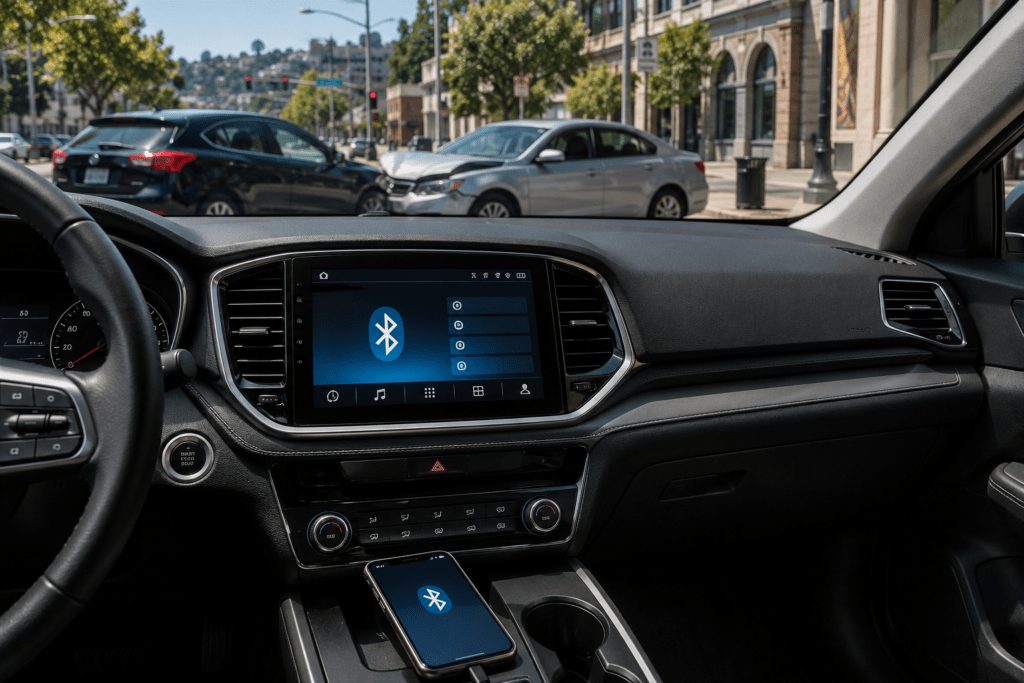
Bluetooth has become one of the most widely used technologies inside modern vehicles. Rather than requiring cables or manual configuration each time a driver enters the vehicle, Bluetooth allows smartphones and infotainment systems to reconnect automatically whenever the paired device comes within range. What many drivers do not realize is that this process often generates electronic records documenting connection activity throughout the trip.
An Oakland vehicle Bluetooth accident records investigation frequently begins by identifying the vehicle’s infotainment platform and determining which devices had been paired with the system before the collision. Depending on the manufacturer, investigators may review pairing history, recent device connections, hands-free calling activity, audio streaming sessions, synchronization records, and Bluetooth configuration logs.
Because every automaker uses different software and hardware, the information available after a collision varies considerably from one vehicle to another. Investigators therefore evaluate each infotainment system individually before determining what electronic evidence may still exist.
Bluetooth Pairing Creates Automatic Connection Records
One of the most valuable aspects of an Oakland vehicle Bluetooth accident records investigation is understanding that Bluetooth connections often occur automatically without requiring the driver to interact with the phone. Once a smartphone has been paired with the vehicle, many infotainment systems reconnect immediately after the engine starts.
Depending on the manufacturer, the infotainment system may record when a device connected, whether multiple phones were paired, the name assigned to each connected device, and the sequence in which different devices connected during the trip. These electronic records may later be compared with infotainment system logs, phone records, GPS information, and witness statements to establish portions of the vehicle’s digital activity before the collision.
Because Bluetooth pairing is an automated process, these records may provide investigators with objective electronic information rather than relying solely on human memory.
Hands-Free Calling Systems May Generate Additional Information
Many Bluetooth systems allow drivers to place and receive telephone calls directly through the vehicle’s infotainment system. Rather than holding a phone, drivers communicate using the vehicle’s microphone, speakers, and steering wheel controls.
An Oakland vehicle Bluetooth accident records investigation may include reviewing whether hands-free calling systems were connected before the collision, whether recent call activity synchronized with the infotainment system, or whether voice communication features were available during the trip.
These records do not reveal every action performed on the smartphone itself. Instead, they represent one additional source of digital information that investigators evaluate alongside cellular records, infotainment system data, surveillance footage, and other available evidence.
Media Streaming and Connected Devices May Create Additional Records
Bluetooth technology is commonly used for much more than telephone calls. Many drivers stream music, podcasts, audiobooks, navigation instructions, or other media through their vehicle’s speakers using connected mobile devices.
An Oakland vehicle Bluetooth accident records investigation may therefore include reviewing whether media streaming services were active before the collision, whether multiple devices connected during the trip, or whether Bluetooth activity corresponded with other digital records preserved by the vehicle.
Because different manufacturers store Bluetooth information differently, investigators generally compare wireless connection records with infotainment system logs, GPS history, Event Data Recorder information, and physical evidence rather than relying on Bluetooth data alone.
For additional guidance on preserving important evidence after a collision, read What to Do After a Car Accident in California: What Actually Matters. Many of the same documentation principles discussed in that guide also apply when electronic vehicle systems may contain valuable digital evidence.
If you were injured in a collision involving a modern connected vehicle, our Oakland Car Accident Lawyer page explains how Bluetooth records, infotainment system information, Event Data Recorder data, surveillance footage, and other forms of electronic evidence may become important during the investigation of a personal injury claim.
Why Bluetooth Connection Records Should Be Preserved Promptly
One of the most important aspects of an Oakland vehicle Bluetooth accident records investigation is recognizing that Bluetooth information may change as vehicles continue to be used after a collision. Connecting new smartphones, removing previously paired devices, installing software updates, resetting the infotainment system, or performing vehicle repairs may affect the electronic records available for review.
Because every manufacturer stores Bluetooth information differently, investigators often work to identify available wireless connection records as early as reasonably possible following the collision. Acting promptly may improve the opportunity to preserve pairing history, connection logs, synchronization activity, and related infotainment system records before routine vehicle use modifies the available information.
Every Manufacturer Uses Different Bluetooth Technology
Not every infotainment platform stores Bluetooth information the same way. Luxury vehicles, domestic manufacturers, imported vehicles, electric vehicles, and hybrid models all use different operating systems, software platforms, and hardware configurations.
An Oakland vehicle Bluetooth accident records investigation often begins by identifying the manufacturer, infotainment platform, Bluetooth software, and connected services installed in the vehicle. Understanding these systems early helps investigators determine what electronic records may still exist and what additional digital evidence should be reviewed as part of the overall investigation.
How Vehicle Bluetooth Connection Records May Support a Car Accident Investigation
An Oakland vehicle Bluetooth accident records investigation rarely relies on one digital record by itself. Modern vehicles continuously generate information through Bluetooth modules, infotainment systems, connected smartphones, navigation platforms, and onboard electronics. Investigators often compare Bluetooth connection history with Event Data Recorder (EDR) information, surveillance footage, dashcam video, witness statements, police reports, and physical evidence collected from the collision scene to better understand the sequence of events leading up to the crash.
As vehicle technology becomes more sophisticated, Bluetooth systems may provide investigators with valuable contextual information that was unavailable in older vehicles. While Bluetooth records cannot determine legal responsibility by themselves, they may help establish whether connected devices were present, when wireless communication occurred, and how electronic systems interacted before the collision.
Connection History May Help Establish a Digital Timeline
One of the most valuable aspects of an Oakland vehicle Bluetooth accident records investigation is reviewing connection history. Many infotainment systems automatically record when paired devices connect after the vehicle starts and when they disconnect after the trip ends.
Investigators may compare these timestamps with surveillance footage, GPS information, witness statements, emergency dispatch records, and police reports to determine whether a smartphone remained connected throughout the trip or whether another device paired with the vehicle shortly before the collision. While connection records alone cannot explain why an accident occurred, they frequently provide an objective electronic timeline that supplements other available evidence.
Because different manufacturers record connection events differently, investigators evaluate each infotainment platform individually rather than assuming every vehicle stores identical Bluetooth information.
Hands-Free Communication May Generate Additional Records
Bluetooth technology allows many drivers to place telephone calls without physically handling their smartphones. Once connected, the vehicle’s infotainment system may synchronize call activity, recent contacts, and voice communication features through the dashboard interface.
An Oakland vehicle Bluetooth accident records investigation may therefore include reviewing whether a hands-free communication session occurred before the collision or whether Bluetooth calling services remained active during the trip. Depending on the infotainment platform, investigators may compare Bluetooth synchronization records with cellular records, phone activity, Event Data Recorder information, and other electronic evidence.
These records should not be interpreted in isolation. Investigators typically compare Bluetooth activity with the complete body of available evidence before drawing conclusions about driver behavior.
Multiple Paired Devices May Become Relevant
Many households pair more than one smartphone with the same vehicle. Family members, business associates, or multiple drivers may all have previously connected devices stored within the infotainment system.
An Oakland vehicle Bluetooth accident records investigation may therefore examine which paired device connected during the trip, whether multiple devices attempted to connect simultaneously, or whether the system automatically selected one smartphone over another. This information may help investigators better understand which device was interacting with the vehicle before the collision occurred.
Because paired device history varies significantly between manufacturers, investigators compare Bluetooth records with infotainment system logs, navigation history, witness statements, and other available documentation rather than relying solely on wireless connection information.
Understanding how multiple forms of digital evidence work together can also be helpful following any collision. Our article How Personal Injury Settlements Really Work in California explains why preserving photographs, electronic records, medical documentation, witness statements, and repair estimates often creates a more complete understanding of a personal injury claim.
California Laws That May Become Relevant During an Investigation Involving Bluetooth Technology
Although Oakland vehicle Bluetooth accident records may provide useful electronic information, investigators still evaluate every collision using the complete body of available evidence. California traffic laws, roadway conditions, witness testimony, vehicle inspections, and physical evidence remain central to determining how an accident occurred.
Drivers Must Maintain Reasonable Attention While Operating a Vehicle
California’s Basic Speed Law (Vehicle Code §22350) requires motorists to operate their vehicles at a speed that is reasonable and prudent for existing roadway, traffic, weather, and visibility conditions. Regardless of the technology installed inside the vehicle, drivers are expected to maintain appropriate attention to changing roadway conditions.
During an Oakland vehicle Bluetooth accident records investigation, investigators may compare Bluetooth connection activity with Event Data Recorder information, roadway evidence, surveillance footage, and witness statements to better understand the circumstances leading up to the collision. Bluetooth records provide additional context but do not replace the broader investigation.
California Restricts Handheld Wireless Device Use
California’s Vehicle Code §23123.5 generally prohibits drivers from holding and operating handheld wireless telephones or electronic communication devices while driving, subject to certain statutory exceptions.
Because Bluetooth technology allows smartphones to connect wirelessly through a vehicle’s infotainment system, an Oakland vehicle Bluetooth accident records investigation may examine whether the driver’s phone was connected through hands-free technology rather than being physically handled. Investigators compare Bluetooth records with phone records, witness statements, infotainment system logs, and other available evidence instead of relying on wireless connection records alone.
Comparative Negligence May Still Apply
California follows a comparative negligence system, meaning investigators evaluate the conduct of everyone involved rather than assuming responsibility automatically belongs to one driver.
An Oakland vehicle Bluetooth accident records investigation may therefore include reviewing Bluetooth history together with surveillance footage, Event Data Recorder information, dashcam recordings, police reports, roadway evidence, witness statements, and vehicle inspections before determining how the collision occurred.
If you’re recovering from injuries following a collision, you may also find Should You Accept a Car Accident Settlement Before Finishing Medical Treatment in Newport Beach? helpful for understanding why preserving medical documentation and completing treatment may become important before resolving a personal injury claim.
What You Can Do to Help Preserve Bluetooth Evidence
Because Bluetooth systems continue updating every time new devices connect to the vehicle, preserving available electronic records promptly may improve the overall investigation. An Oakland vehicle Bluetooth accident records investigation often benefits from documenting digital evidence before additional trips, software updates, or new device pairings modify the original information.
Avoid Removing Paired Devices
After a collision, drivers sometimes delete paired smartphones, reset infotainment settings, or remove connected devices while arranging vehicle repairs or preparing to sell the vehicle. If possible, avoid making changes to the Bluetooth system until available electronic information has been documented.
Maintaining the original infotainment configuration may preserve valuable Oakland vehicle Bluetooth accident records that investigators later compare with navigation history, Event Data Recorder information, phone records, and surveillance footage.
Preserve Physical Evidence Alongside Digital Records
Bluetooth information becomes significantly more valuable when evaluated together with traditional accident evidence. If it is safe to do so, photograph vehicle damage, roadway conditions, nearby intersections, skid marks, debris, weather conditions, traffic control devices, and any nearby surveillance cameras.
These photographs may later be compared with Oakland vehicle Bluetooth accident records, allowing investigators to evaluate how wireless connection history corresponds with the physical evidence collected from the collision scene.
Frequently Asked Questions About Vehicle Bluetooth Connection Records
What are vehicle Bluetooth connection records?
Oakland vehicle Bluetooth accident records generally refer to the electronic information created when a smartphone or other wireless device connects to a vehicle’s Bluetooth system. Depending on the manufacturer, these records may include pairing history, connection timestamps, hands-free calling activity, audio streaming sessions, synchronized contacts, and connected device information. Although Bluetooth records do not determine fault by themselves, they may become one source of digital evidence reviewed during an accident investigation.
Can Bluetooth records show whether a phone was connected before a collision?
In many situations, yes. An Oakland vehicle Bluetooth accident records investigation may include reviewing whether a smartphone was paired with the vehicle, when it connected, whether multiple devices were available, and whether hands-free features were active during the trip. Investigators generally compare this information with infotainment system records, Event Data Recorder (EDR) data, surveillance footage, witness statements, and police reports before drawing conclusions.
Does Bluetooth data prove a driver was distracted?
No. Oakland vehicle Bluetooth accident records may indicate that a device was connected to the vehicle, but they generally do not establish what the driver was doing or whether distraction contributed to the collision. Investigators typically evaluate Bluetooth activity together with phone records, dashcam footage, witness statements, physical evidence, and roadway conditions before determining how the collision occurred.
Can more than one phone be paired with the same vehicle?
Yes. Many modern vehicles allow multiple smartphones to be paired with the infotainment system. During an Oakland vehicle Bluetooth accident records investigation, investigators may review which device connected during the trip, whether another paired device attempted to connect, and how the infotainment system managed multiple Bluetooth profiles before the collision.
Why should Bluetooth records be preserved quickly?
Modern infotainment systems continue updating every time a new device connects to the vehicle. Pairing additional phones, deleting devices, performing software updates, or resetting the infotainment system may modify existing Bluetooth records. Preserving Oakland vehicle Bluetooth accident records promptly may improve the opportunity to review the original electronic information before changes occur.
An Oakland vehicle Bluetooth accident records investigation may provide valuable digital information that helps investigators better understand how a vehicle’s connected systems were operating before a collision. Bluetooth pairing history, wireless connection records, hands-free communication activity, media streaming sessions, and synchronized device information may all contribute to establishing a broader timeline of vehicle operation before the accident.
While Bluetooth records can provide important context, they represent only one component of a comprehensive accident investigation. Investigators generally compare wireless connection records with infotainment system data, Event Data Recorder information, surveillance footage, dashcam video, witness statements, police reports, vehicle inspections, and physical evidence before determining how the collision occurred. Looking at these sources together frequently provides a more complete understanding than relying on any single form of digital evidence.
Because infotainment systems continue updating as vehicles are driven and new devices connect, preserving available Bluetooth information promptly may improve the opportunity to review original electronic records. Whether the vehicle uses factory-installed Bluetooth, Apple CarPlay, Android Auto, or another connected platform, identifying available Oakland vehicle Bluetooth accident records early may become an important part of documenting the circumstances surrounding a collision.
Connect With Super Woman Super Lawyer
If you or someone you love has been injured in a collision involving a modern connected vehicle, understanding what electronic evidence may be available can feel overwhelming. At Super Woman Super Lawyer, we help clients understand how Bluetooth connection records, infotainment system data, Event Data Recorder information, surveillance footage, witness statements, and other forms of digital evidence may become important during the investigation of a personal injury claim.
You can also learn more about our services by visiting our Oakland Car Accident Lawyer page.
Connect with Super Woman Super Lawyer today.
Online Form: Request a case review
Call Now: 800.800.6916
Live Chat: Speak with a legal professional instantly
 Maryam Parman