Santa Ana T-bone soft tissue injury symptoms may not always appear immediately after a side-impact collision. While broken bones or visible injuries often receive immediate attention, many people involved in T-bone crashes begin noticing neck pain, shoulder stiffness, muscle soreness, back pain, or limited mobility only after the initial shock of the collision has passed. Because soft tissue injuries frequently develop over hours or even several days, documenting symptoms as they appear may become an important part of understanding the overall impact of the crash.
At Super Woman Super Lawyer, we understand that soft tissue injuries often affect much more than physical comfort alone. A Santa Ana T-bone soft tissue injury may influence work responsibilities, driving, household activities, childcare, sleep, exercise, and many other parts of daily life. Medical records, therapy notes, imaging studies, photographs, symptom journals, employment records, and other documentation frequently work together to provide a more complete picture of how the injury affects recovery over time.
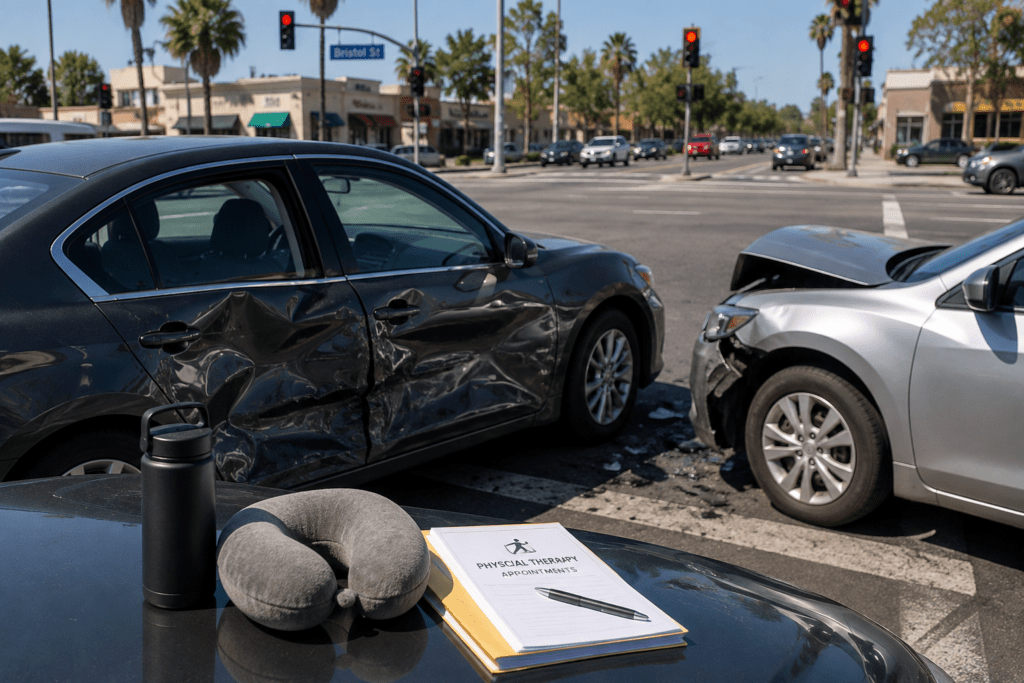
Side-impact collisions occur throughout Santa Ana every day along Bristol Street, Main Street, First Street, Grand Avenue, Edinger Avenue, and numerous busy intersections throughout Orange County. Unlike rear-end collisions, T-bone crashes often expose occupants to significant sideways movement as the vehicle absorbs the force of impact. Even when vehicle damage appears moderate, occupants may experience soft tissue injuries affecting muscles, tendons, ligaments, and connective tissues that require ongoing medical evaluation and rehabilitation.
According to the National Highway Traffic Safety Administration (NHTSA), side-impact collisions frequently produce injury patterns that differ from other crash types because occupants move laterally during impact. Symptoms involving the neck, shoulders, spine, hips, and surrounding soft tissues may continue developing throughout the recovery process.
This article explains how a Santa Ana T-bone soft tissue injury may develop following a side-impact collision, what medical documentation commonly supports recovery, what additional records may help document everyday limitations, and why maintaining organized information may become valuable throughout the claims process.
Why T-Bone Collisions Often Cause Soft Tissue Injuries
Side-impact collisions expose the body to forces that differ significantly from head-on or rear-end crashes. Instead of moving primarily forward or backward, occupants may be pushed sideways as the vehicle absorbs the impact. These rapid movements may place stress on muscles, tendons, ligaments, and other soft tissues throughout the body.
A Santa Ana T-bone soft tissue injury often develops because the body attempts to stabilize itself during the sudden sideways movement. Even when airbags deploy and seat belts function properly, soft tissue injuries may still occur due to the rapid forces involved during the collision.
Because every collision involves different vehicle speeds, seating positions, and impact locations, the resulting injuries vary considerably from one person to another.
Side Impact Forces and Body Movement
Unlike frontal collisions, T-bone accidents frequently cause occupants to move toward the side of the vehicle before being restrained by the seat belt or striking interior vehicle surfaces. The neck, shoulders, spine, hips, and torso may all experience rapid side-to-side movement during the impact.
A Santa Ana T-bone soft tissue injury investigation often includes reviewing photographs of vehicle damage, medical records, and the location of the impact to better understand how the forces of the collision affected the injured person’s body.
Because each seating position experiences side-impact forces differently, investigators often evaluate the collision together with the available medical documentation.
Neck, Shoulder, Back, and Hip Injuries
Soft tissue injuries frequently involve muscles, tendons, and ligaments supporting major joints throughout the body. Following a side-impact collision, individuals sometimes report pain involving the neck, shoulders, upper back, lower back, hips, or surrounding muscles that was not immediately noticeable at the accident scene.
A Santa Ana T-bone soft tissue injury recovery often includes medical evaluations documenting muscle strains, ligament injuries, inflammation, reduced range of motion, or persistent soreness affecting normal daily activities.
Healthcare providers frequently monitor these symptoms throughout recovery because soft tissue injuries may improve gradually over time.
Why Symptoms May Not Appear Immediately
One characteristic of many soft tissue injuries is that symptoms do not always develop immediately following the collision. Adrenaline, stress, and the body’s natural response to trauma sometimes delay the appearance of pain, stiffness, swelling, or limited mobility.
A Santa Ana T-bone soft tissue injury may therefore become more noticeable during the hours or days after the collision rather than while still at the accident scene. As symptoms develop, continued medical evaluation often helps document how the injury progresses during recovery.
Maintaining records as symptoms change may help create a clearer timeline throughout treatment.
For additional guidance on preserving documentation after a collision, read What to Do After a Car Accident in California: What Actually Matters. Many of the same documentation principles discussed in that guide also apply following side-impact collisions where soft tissue symptoms may continue developing after the accident.
If you were injured in a side-impact collision, our Santa Ana Car Accident Lawyer page explains how medical documentation, photographs, witness statements, and other evidence may become important during the evaluation of a personal injury claim.
Medical Documentation That May Help Track Recovery
Medical documentation frequently becomes one of the most important parts of recovery following a side-impact collision. A Santa Ana T-bone soft tissue injury often requires continued evaluation as symptoms develop, treatment recommendations change, and healthcare providers monitor progress over time.
Because soft tissue injuries frequently improve gradually rather than immediately, maintaining organized medical records throughout treatment may provide a more complete understanding of the recovery process.
Emergency Care, Imaging, and Follow-Up Evaluations
Emergency room evaluations often represent the beginning of documenting a soft tissue injury. Ambulance reports, physician notes, X-rays, CT scans, MRI studies, discharge instructions, and follow-up recommendations frequently become the foundation of the medical record.
A Santa Ana T-bone soft tissue injury file often begins with these early records before expanding to include additional physician visits, orthopedic evaluations, physical examinations, and specialist consultations as recovery continues.
Medical Documentation That May Help Track Recovery
Medical documentation often continues developing throughout the recovery process following a side-impact collision. A Santa Ana T-bone soft tissue injury may require several physician visits, follow-up evaluations, rehabilitation appointments, and ongoing treatment before healthcare providers fully understand how the injury affects daily life. Unlike fractures that may appear clearly on initial imaging, soft tissue injuries sometimes require continued observation as symptoms evolve over time.
Because recovery frequently progresses gradually, maintaining organized medical records may help preserve a consistent timeline while treatment continues.
Emergency Care, Imaging, and Follow-Up Evaluations
Emergency medical treatment often represents the first stage of documenting a soft tissue injury. Ambulance reports, emergency department evaluations, physician examinations, X-rays, CT scans, MRI studies, discharge instructions, and referrals frequently become the foundation of the medical record.
A Santa Ana T-bone soft tissue injury recovery often includes preserving these early records together with follow-up physician notes documenting how symptoms change after the initial collision. Depending on the individual’s recovery, healthcare providers may recommend additional imaging, orthopedic consultations, neurological evaluations, or other specialist assessments.
Comparing these records over time frequently provides a clearer understanding of how the injury develops throughout recovery.
Physical Therapy, Chiropractic Care, and Pain Management
Many individuals recovering from soft tissue injuries participate in physical therapy, chiropractic treatment, pain management programs, massage therapy, or other rehabilitative care designed to improve mobility and reduce discomfort.
A Santa Ana T-bone soft tissue injury file often includes therapy notes documenting range of motion, muscle strength, flexibility, pain levels, functional limitations, and progress toward treatment goals. These records frequently complement physician evaluations by describing how recovery changes throughout regular rehabilitation sessions.
Because therapy recommendations often evolve over time, maintaining organized records may help illustrate the progression of treatment.
Symptom Journals and Daily Activity Records
Soft tissue symptoms frequently vary from day to day. Neck stiffness, shoulder pain, muscle soreness, headaches, fatigue, reduced mobility, and sleep disturbances sometimes improve temporarily before becoming more noticeable after work, exercise, or routine daily activities.
A Santa Ana T-bone soft tissue injury recovery may therefore include maintaining personal symptom journals documenting pain levels, medication use, sleep quality, mobility limitations, therapy appointments, and changes in daily activities between physician visits.
Although these personal records do not replace formal medical documentation, they often help individuals communicate ongoing symptoms more accurately during follow-up appointments.
Understanding how medical documentation supports a personal injury claim can also be helpful. Our article How Personal Injury Settlements Really Work in California explains why preserving medical records, therapy documentation, employment records, photographs, and other evidence frequently provides a more complete understanding of a personal injury claim.
Evidence Beyond Medical Records
While medical records remain central to documenting recovery, they may not fully capture how a soft tissue injury affects everyday life. A Santa Ana T-bone soft tissue injury investigation often includes additional records that help explain changes involving work, household responsibilities, transportation, and routine daily activities.
These materials frequently develop naturally throughout recovery as injured individuals begin returning to work, resuming family responsibilities, and adapting to ongoing physical limitations.
Photos of Vehicle Damage and Impact Location
Photographs taken immediately after a side-impact collision often preserve important details regarding the severity and location of the crash. Images showing vehicle damage, intrusion into the passenger compartment, roadway conditions, intersection layout, traffic signals, and final vehicle positions frequently become valuable parts of the overall documentation.
A Santa Ana T-bone soft tissue injury investigation often compares these photographs with medical documentation to better understand how the direction and location of the impact correspond with the injuries reported during treatment.
Police Reports, Witness Statements, and Intersection Cameras
Police reports frequently provide an initial summary of how the collision occurred, while witness statements may offer additional observations regarding traffic signals, vehicle movements, and the sequence of events before impact. Nearby businesses, traffic cameras, or residential surveillance systems may also have recorded portions of the collision.
A Santa Ana T-bone soft tissue injury investigation often compares these independent sources together with photographs and medical documentation to create a more complete understanding of both the collision and the resulting injuries.
Missed Work, Household Limitations, and Transportation Changes
Soft tissue injuries often affect more than physical recovery. Many individuals experience temporary or ongoing limitations involving work responsibilities, childcare, household chores, driving, exercise, shopping, or transportation to medical appointments.
A Santa Ana T-bone soft tissue injury file may therefore include employment records, missed work documentation, appointment calendars, transportation expenses, and personal notes describing changes in everyday activities throughout recovery.
If you’re continuing treatment following a side-impact collision, you may also find Should You Accept a Car Accident Settlement Before Finishing Medical Treatment in Newport Beach? helpful for understanding why preserving medical documentation and completing recommended treatment may become important before resolving a personal injury claim.
Frequently Asked Questions About Soft Tissue Injuries After a T-Bone Accident
Why do soft tissue injuries sometimes appear after the accident instead of immediately?
A Santa Ana T-bone soft tissue injury does not always cause immediate pain. Following a side-impact collision, adrenaline and the body’s response to trauma may temporarily mask symptoms. Neck stiffness, shoulder pain, back soreness, muscle spasms, headaches, or limited range of motion sometimes become more noticeable hours or days after the crash. Continued medical evaluation may help document how symptoms progress throughout recovery.
What medical records are commonly preserved after a T-bone collision?
A Santa Ana T-bone soft tissue injury file often includes emergency room records, physician evaluations, diagnostic imaging, orthopedic consultations, physical therapy documentation, chiropractic treatment records, pain management notes, medication records, and follow-up appointments. Organizing these records chronologically often provides a clearer picture of recovery over time.
Why are symptom journals sometimes helpful?
Soft tissue injuries often fluctuate during recovery. A Santa Ana T-bone soft tissue injury recovery may involve periods of improvement followed by increased discomfort after work, exercise, driving, or routine daily activities. Personal journals documenting pain levels, mobility limitations, sleep quality, medication use, and therapy appointments may help individuals communicate changing symptoms more accurately during follow-up medical visits.
Can photographs and witness statements still matter if the injuries are soft tissue injuries?
Yes. A Santa Ana T-bone soft tissue injury investigation often includes photographs of vehicle damage, the point of impact, roadway conditions, police reports, witness statements, and available surveillance footage. These records frequently help investigators understand how the side-impact collision occurred while medical records document the injuries resulting from the crash.
Why should recovery records remain organized throughout treatment?
Recovery from soft tissue injuries often continues for weeks or months after a side-impact collision. A Santa Ana T-bone soft tissue injury file may continue expanding as additional physician visits, therapy appointments, imaging studies, employment records, and personal recovery documentation become available. Maintaining organized records throughout treatment may help preserve a complete timeline of recovery.
Insurance Questions After a T-Bone Accident
Insurance reviews often continue while treatment for soft tissue injuries is still ongoing. A Santa Ana T-bone soft tissue injury investigation may involve additional physician visits, therapy, rehabilitation, and updated medical documentation while insurance companies continue evaluating the claim.
Because symptoms sometimes continue developing during recovery, preserving complete documentation may help maintain an accurate record of treatment and day-to-day limitations.
Delayed Soft Tissue Symptoms
One issue that sometimes arises following a side-impact collision involves symptoms that develop after the initial emergency evaluation. Neck pain, shoulder stiffness, muscle soreness, headaches, reduced mobility, or lower back pain may become more noticeable as the body recovers from the initial trauma.
A Santa Ana T-bone soft tissue injury investigation frequently includes ongoing medical evaluations documenting these delayed symptoms as healthcare providers continue monitoring recovery.
Recorded Statement Requests Before Recovery Is Complete
Insurance companies sometimes request recorded statements shortly after the collision, even while medical treatment is still underway. These conversations often include questions regarding symptoms, treatment, work limitations, and daily activities before physicians have completed their evaluations.
A Santa Ana T-bone soft tissue injury claim frequently involves maintaining organized records of insurance communications, claim numbers, adjuster contact information, letters, emails, and requests for additional documentation while treatment continues.
Settlement Discussions While Treatment Is Still Ongoing
Recovery from soft tissue injuries often extends beyond the first few medical appointments. Physical therapy, chiropractic care, pain management, orthopedic evaluations, and additional follow-up visits may continue for an extended period.
A Santa Ana T-bone soft tissue injury investigation frequently develops alongside this continuing medical care. Maintaining organized treatment records, therapy documentation, employment records, symptom journals, and other recovery materials may help preserve important information while the claim continues to be evaluated.
A Santa Ana T-bone soft tissue injury often affects much more than physical discomfort following a side-impact collision. Neck pain, shoulder injuries, back pain, muscle strains, ligament injuries, headaches, and reduced mobility may continue influencing work responsibilities, household activities, driving, sleep, and other aspects of everyday life throughout recovery.
While emergency medical records provide an important starting point, they represent only one part of the recovery process. Physician evaluations, therapy documentation, imaging studies, employment records, symptom journals, photographs, police reports, and witness statements frequently work together to create a more complete understanding of how the collision affected daily life.
Because soft tissue symptoms may continue developing long after the collision itself, maintaining organized documentation throughout recovery may help preserve important medical and personal records while treatment continues. Whether recovery lasts several weeks or several months, careful documentation often provides the clearest picture of the progression of healing following a side-impact crash.
Connect With Super Woman Super Lawyer
If you or someone you love is recovering from injuries after a side-impact collision, understanding how medical documentation, therapy records, and other evidence fit into the recovery process can feel overwhelming. At Super Woman Super Lawyer, we help clients understand how medical records, treatment documentation, employment information, photographs, witness statements, and other evidence may become important during the evaluation of a personal injury claim.
You can also learn more about our services by visiting our Santa Ana Car Accident Lawyer page.
Online Form: Request a case review
Call Now: 800.800.6916
Live Chat: Speak with a legal professional instantly
 Maryam Parman